*This post may contain affiliate links for which I earn commissions.*
Choosing a sofa for a small living room can feel harder than it should be. I’ve been there —measuring twice, second-guessing everything, and wondering if the piece I choose will make the room feel calm or completely cramped.
The truth is, the right sofa doesn’t just fit. It helps your space feel more open, more functional, and more intentional.
I’ll walk you through exactly how I approach this so you can make a confident, well-considered choice.
Start Here: Measure Before You Browse
Before looking at styles or colors, I always start with measurements. It saves time and prevents expensive mistakes.
Here’s what I focus on:
- Wall width: How much horizontal space do you actually have?
- Depth allowance: Include walking space in front of the sofa
- Room flow: Make sure doors, windows, and pathways stay clear
A simple guideline I use:
- Leave at least 24 to 30 inches for walking space
- Aim for a sofa that takes up no more than two-thirds of your wall
One small trick that helps a lot:
Use masking tape on the floor to outline the sofa’s size. It makes the decision feel real very quickly.
Choose the Right Sofa Size
In small living rooms, size matters more than style. If a sofa is even slightly too big, the whole room feels off.
Here’s how I break it down:
Loveseat or 2-Seater
- Best for very compact rooms
- Keeps the layout light and flexible
- Easy to pair with a small chair or stool

Apartment-Size Sofa
- Slightly more seating without overwhelming the room
- A good middle ground for small but shared spaces
Modular Sofa (Small-Scale)
- Works if you need flexibility
- Can be rearranged as your needs change
If you’re unsure, go smaller. A small but smart sofa will always feel better than one that pushes the limits.
Pick the Right Shape for Your Layout
The shape of your sofa affects how the entire room flows. This is where I see most people get stuck.
Consider these:
An Armless Sofa
- Visually lighter
- Great for tight or narrow layouts
A Slim-Arm Sofa
- Comfortable but still space-conscious
- A safe and balanced option
An L-Shaped or Chaise Sofa
- Only works if they don’t block movement
- Best when they replace the need for extra seating
A Low-Profile Sofa
- Sit lower to the ground
- Help ceilings feel higher and the room more open
In small spaces, I always think about visual weight, not just physical size.
Look for Space-Enhancing Design Features
Some sofas naturally make a room feel more open. I look for these details every time.
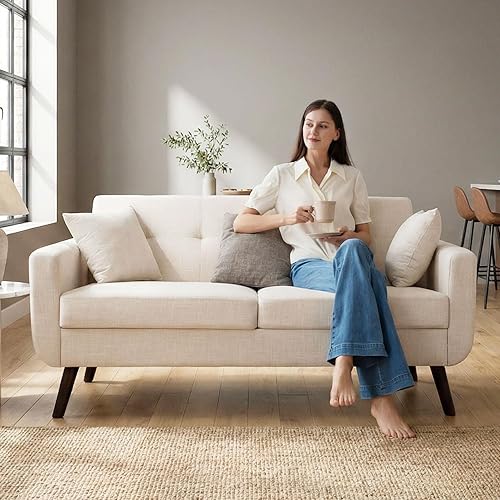
- Raised legs
You can see the floor underneath, which makes the room feel less crowded - Slim frame
Less bulk means more breathing room - Tight back cushions
Keeps the silhouette clean and simplified - Shallow depth (around 30 to 35 inches)
Prevents the sofa from taking over the room
These small details add up. They quietly change how the space feels.
Consider Functionality
In a small living room, your sofa often needs to do more than one job.
I always ask myself this first. What else do I need this sofa to do?
Sofa Bed
- Useful for guests or studio apartments
- Saves you from needing a separate sleeping solution
Storage Sofa
- Hidden compartments for blankets or seasonal items
- Helps reduce visual clutter
Modular Pieces
- Can adapt as your layout changes
If your space is limited, functionality isn’t extra – it’s essential.

Choose the Right Color and Fabric
Color has a quiet but powerful effect in small spaces.
I usually lean toward tones that keep the room feeling calm and cohesive.
Colors That Work Well
- Light neutrals: ivory, oat, warm beige
→ Help the room feel more open - Mid-tones: taupe, soft grey, muted olive
→ Add depth without heaviness
Very dark sofas can work, but only if the rest of the room feels balanced and not too dense.
Fabric Choices
- Linen or cotton blends → breathable and relaxed
- Textured weaves → add interest without clutter
- Avoid heavy, shiny fabrics → they tend to feel bulky
The goal is a look that feels intentional, not overwhelming.
Match Your Sofa to Your Style
Your sofa should fit your style — but in a simplified way.
In small spaces, restraint matters more than decoration.
Here’s how I think about it:
- Minimalist: clean lines, neutral tones, slim arms
- Afro-Bohemian: warm base + layered textures (think cushions and throws)
- Traditional: softer shapes, but scaled down
- Modern: low profile, structured, uncluttered
You don’t need a statement piece. You need something that supports the overall feeling of the room.
Layout Tips: Make Your Sofa Work Harder
Once you have the right sofa, placement makes all the difference.
A few things I’ve learned:
- If possible, don’t push it tightly against the wall
- Pair it with a small, proportionate coffee table
- Keep the surrounding furniture minimal
One strong piece often works better than several smaller ones competing for space.
Leave room for the space to breathe.
Common Mistakes to Avoid
I’ve made some of these myself, so they’re worth calling out.
- Choosing a sofa that’s too deep
- Ignoring leg height (which makes the sofa feel heavier)
- Overfilling the room with extra seating
- Focusing only on style and not scale
If something feels tight now, it will feel tighter later.
A Simple Sofa Buying Checklist
Before you decide, run through this:
✔ Fits your wall with space around it
✔ Allows easy movement through the room
✔ Has a light, balanced visual profile
✔ Supports your functional needs
✔ Works with your overall color palette
If you can tick all of these, you’re on the right track.
Final Thoughts
A small living room doesn’t mean you have fewer options. It just means your choices need to be more thoughtful.
I’ve found that when I focus on what truly fits, both physically and visually, the space starts to feel calmer and easier to live in.
- Take your time with this decision
- Measure carefully
- Choose something that supports how you actually live
That’s what makes a space feel intentional.