*This post may contain affiliate links for which I earn commissions.*
When a living room is small, every choice matters, but color matters most.
I’ve found that the right color palette can completely shift how a space feels. A room that once felt tight and cluttered can suddenly feel open, calm, and considered without changing the layout or buying new furniture.
This isn’t about chasing trends or picking “pretty colors.” It’s about choosing combinations that work with light, scale, and materials to support the way you want your space to feel.
In this guide, I’ll walk you through seven color palette ideas that work especially well in small living rooms and how to use them effectively in your space.
How to Choose the Right Color Palette for a Small Living Room
Before getting into specific palettes, it helps to understand what makes a color scheme work in a smaller space.
Think in layers, not single colors
A good palette isn’t just one wall color. It’s a combination of:
- A base (walls, large furniture)
- A secondary tone (textiles, rugs)
- An accent (contrast or depth)
This is often simplified as the 60–30–10 rule, but in small spaces, I like to keep it even softer and more blended.
Use contrast carefully
Too much contrast can break up the room visually and make it feel smaller. Too little contrast can make it feel flat.
The goal is a gentle flow where colors relate to each other rather than compete.
Pay attention to undertones
Warm and cool tones can clash easily. If your sofa is warm beige, pairing it with a cool blue-grey wall can feel slightly off, even if you can’t immediately explain why.
Keeping undertones consistent is one of the easiest ways to make a room feel cohesive.
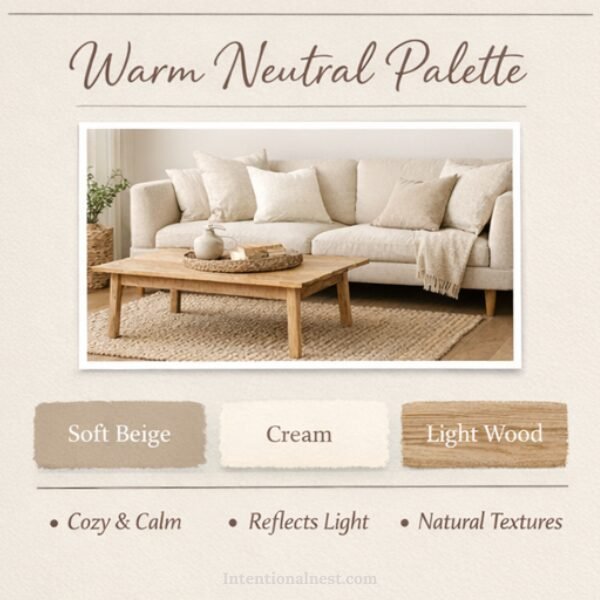
1. Warm Neutrals: Beige, Cream, and Light Wood
Best for
Creating a soft, calm, and welcoming space.
This is one of the most reliable palettes for small living rooms. Warm neutrals reflect light gently and create a sense of openness without feeling stark.
Why it works
- Keeps the space visually continuous
- Adds warmth without heaviness
- Works with almost any natural material
How to use it
- Walls in warm white or soft beige
- Linen or cotton sofa in cream or oat tones
- Light wood furniture for warmth and texture
- Layer in woven baskets, rugs, and soft throws
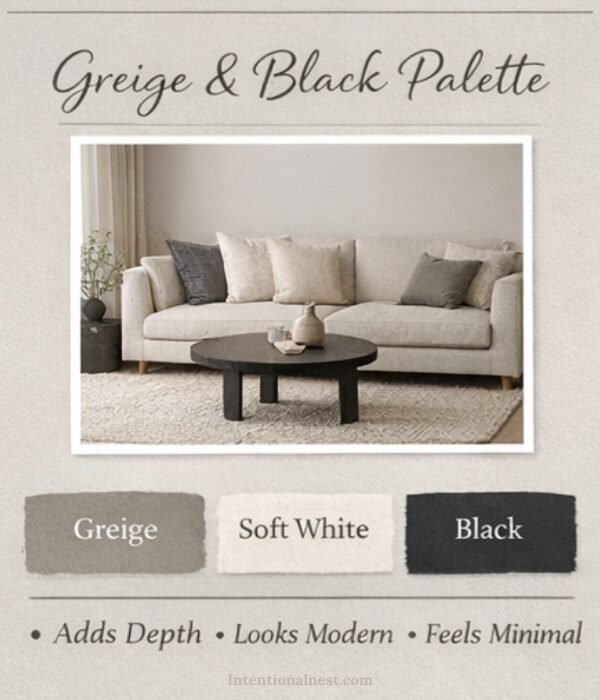
2. Greige and Soft Black Accents
Best for
Adding structure without overwhelming the space.
Greige (a blend of grey and beige) gives you the softness of neutrals with a bit more depth. Adding small black accents creates contrast and definition.
Why it works
- Adds visual interest without clutter
- Anchors the room with subtle contrast
- Keeps the palette refined and modern
How to use it
- Greige walls or sofa as your base
- Black in small doses: coffee table, frames, lighting
- Keep everything else soft and neutral to balance it out
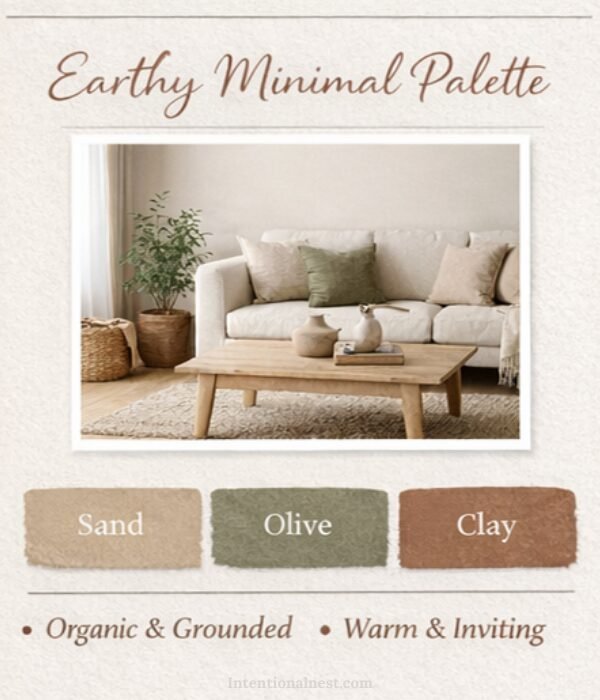
3. Earthy Minimal: Clay, Sand, and Olive
Best for
A grounded, organic feel.
This palette brings warmth and depth while still feeling calm and intentional. It works especially well if you like natural textures and a slightly more layered look.
Why it works
- Earth tones feel cohesive and easy on the eye
- Adds personality without bold contrast
- Works beautifully with natural materials
How to use it
- Neutral base (sand or warm beige walls)
- Add olive through cushions or a chair
- Introduce clay or terracotta in small decor pieces
- Pair with wood, linen, and woven textures
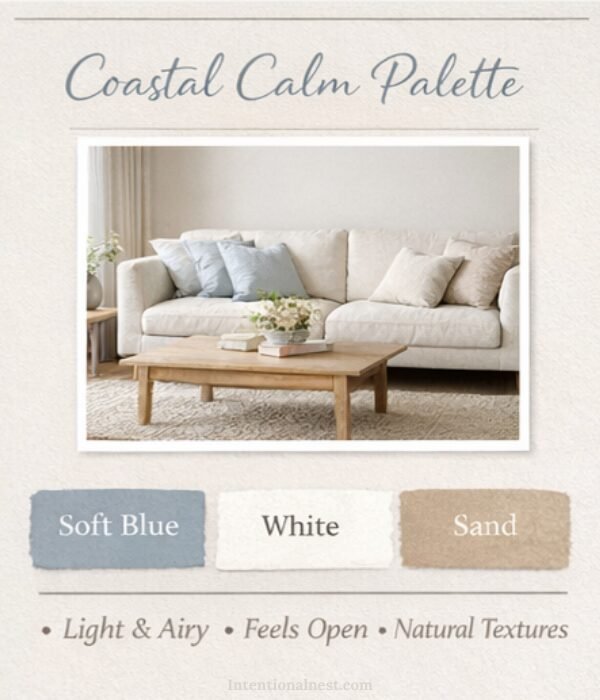
4. Soft Blue, White, and Sand
Best for
Creating an airy, light-filled space.
This palette leans into softness and light reflection, making it ideal for rooms that need to feel more open.
Why it works
- Blue adds freshness without heaviness
- White and sand tones keep things grounded
- Enhances natural light
How to use it
- Keep walls neutral (white or soft beige)
- Add blue through cushions, throws, or artwork
- Use sandy tones in rugs or upholstery
- Avoid overly bright or saturated blues
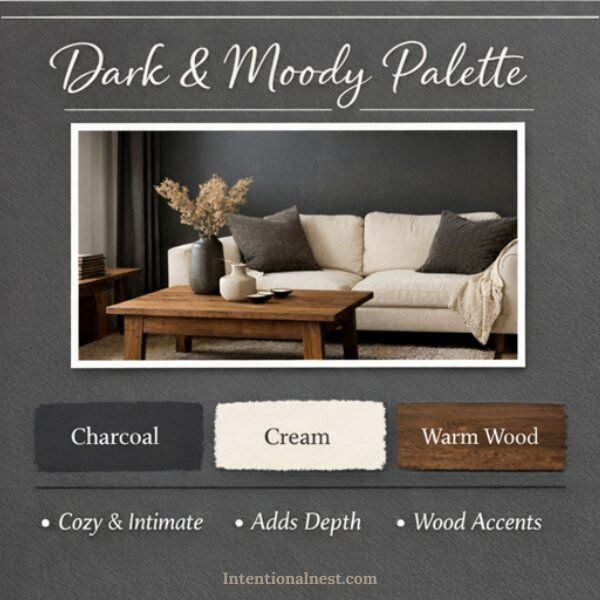
5. Dark and Moody: Charcoal, Cream, and Warm Wood
Best for
A cozy, intimate atmosphere.
A small room can absolutely handle darker colors—if they’re balanced properly.
Why it works
- Dark walls can blur boundaries, making the room feel deeper
- Cream tones prevent the space from feeling heavy
- Wood adds warmth and texture
How to use it
- Choose one main dark element (usually walls)
- Balance with a light sofa or rug
- Add warm wood furniture
- Use soft, layered lighting
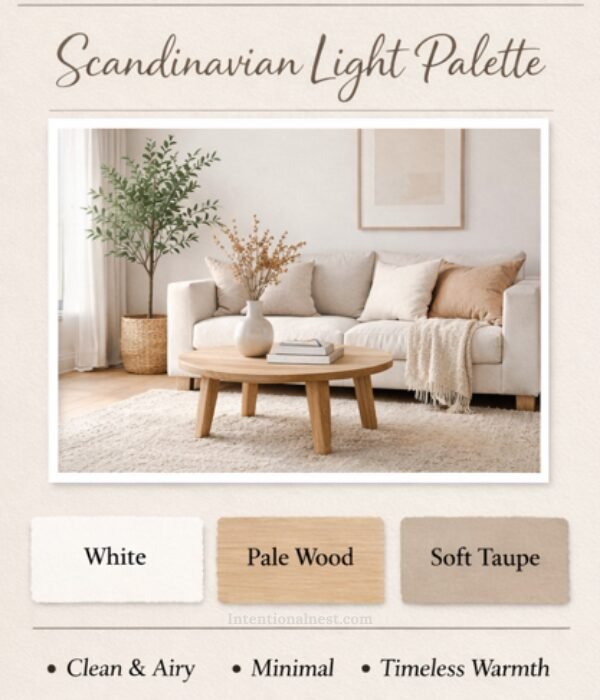
6. Scandinavian Light: White, Pale Wood, and Soft Taupe
Best for
A clean, minimal, and timeless look.
This palette focuses on simplicity, light, and subtle warmth.
Why it works
- Keeps everything visually light
- Avoids starkness by using soft taupe instead of pure grey
- Creates a calm, uncluttered feel
How to use it
- White or off-white walls
- Pale wood furniture
- Soft taupe textiles (sofa, cushions, rug)
- Keep decor minimal and intentional
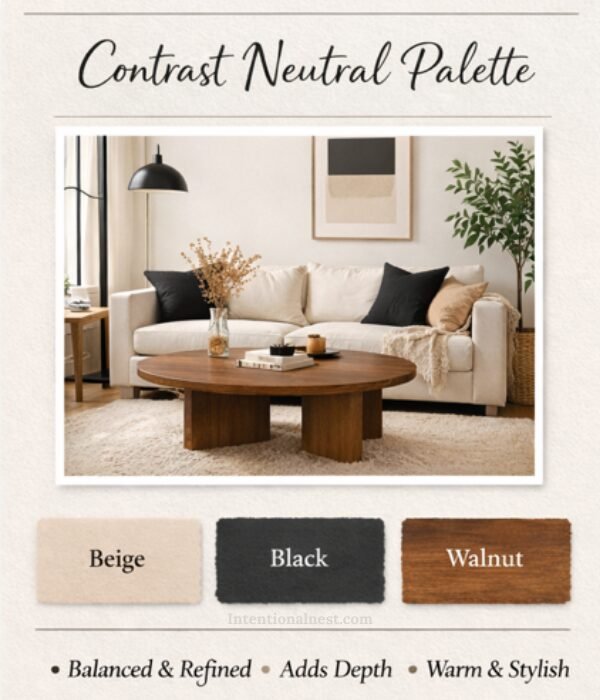
7. Contrast Neutral: Beige, Black, and Walnut
Best for
A balanced, styled look with depth.
This palette adds more contrast than typical neutrals while still feeling cohesive.
Why it works
- Black adds structure
- Walnut brings richness and warmth
- Beige softens the overall look
How to use it
- Beige base (walls or sofa)
- Walnut furniture for warmth
- Black accents in lighting, frames, or decor
- Keep the balance even—don’t let one tone dominate
How to Apply These Palettes in Your Space
Once you’ve chosen a palette, the key is applying it consistently.
I like to think of it in simple layers:
- Walls: Set the tone (light, warm, or moody)
- Sofa: Usually your largest visual anchor
- Rug: Grounds the palette and ties tones together
- Curtains: Soften light and add texture
- Decor: Where you introduce contrast and personality
If each of these elements speaks to the same palette, the room will feel cohesive, even if it’s small.
Common Color Mistakes in Small Living Rooms
A few things I always try to avoid:
- Using too many competing colors
- Choosing stark white without texture or warmth
- Adding dark colors without balancing them
- Ignoring undertones between furniture and walls
Most small spaces don’t need more. They need better coordination.
Final Thoughts
A small living room doesn’t need bold color to feel intentional. In fact, the most effective palettes are often the most restrained.
When colors work together, the space feels quieter, more open, and easier to live in.
Start simple. Choose a palette that feels right to you. Then build it slowly, layer by layer. That’s where the real transformation happens.