
*This post may contain affiliate links for which I earn commissions.*
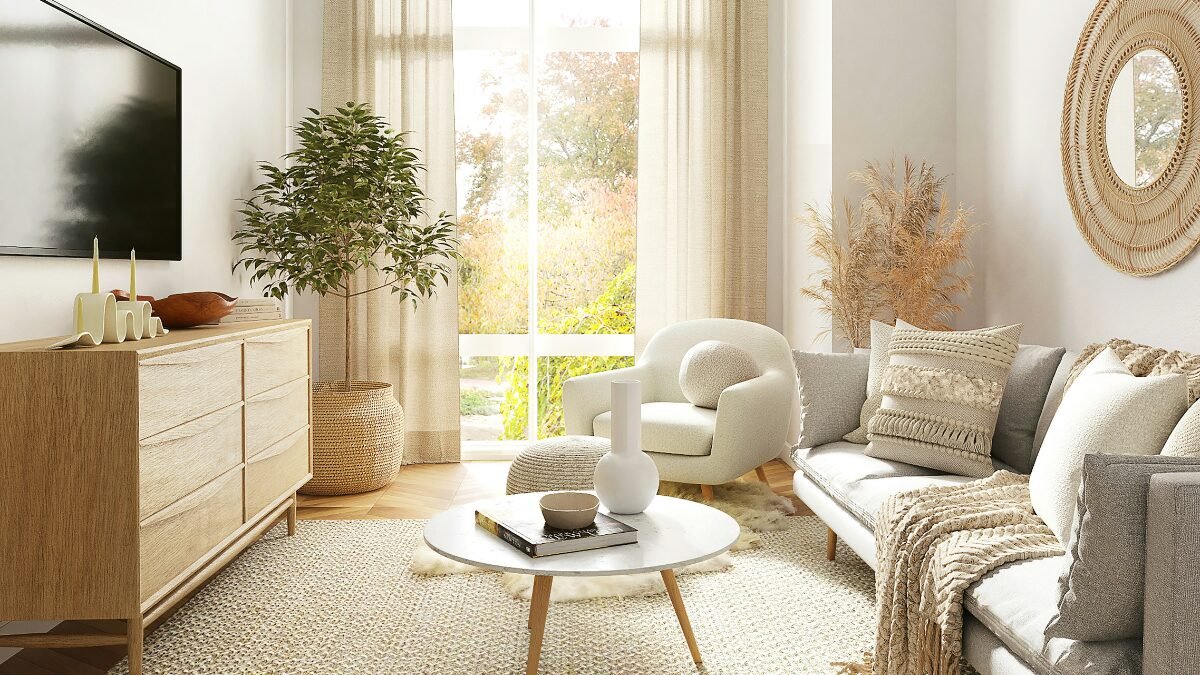
If you’ve ever looked around your small living room and felt like it was just… a little too full, a little too tight, or a little too busy, then you’re not alone.
Small spaces can feel surprisingly overwhelming when everything competes for attention.
But here’s what I’ve learned: It’s not about having less, it’s about choosing better.
With a few intentional decor shifts, you can create a space that feels open, calm, and beautifully put together without buying more or doing a full makeover.
These are the decor hacks I keep coming back to when styling small living rooms.
At a Glance: 15 Simple Decor Shifts
If you’re short on time, start here:
- Use a light, cohesive color palette
- Add contrast through small accents
- Keep walls visually quiet
- Choose furniture with legs
- Scale furniture appropriately
- Use multi-functional pieces
- Float furniture slightly off the walls
- Layer your lighting
- Use warm, soft light
- Maximize natural light
- Add mirrors for depth
- Define zones with rugs
- Draw the eye upward
- Use hidden storage
- Edit your decor
1. Stick to a Light, Cohesive Color Palette
Why it works:
Light tones reflect more light and visually expand the room.
What to do:
Choose a base palette of warm whites, soft beiges, or light greys, and repeat those tones across walls, furniture, and textiles.
Pro tip:
Instead of adding lots of new colors, layer different textures within the same palette to keep things interesting.
2. Add Contrast Through Small Accents
Why it works:
Contrast adds depth without overwhelming a small space.
What to do:
Bring in darker or richer tones through cushions, throws, or a single decor object.
Pro tip:
Keep contrast controlled, think touches, not statements.
3. Keep Walls Visually Quiet
Why it works:
Too much wall decor can make a room feel cluttered, even when it isn’t.
What to do:
Choose one larger piece of art or a very simple arrangement instead of multiple small frames.
Pro tip:
Let negative space do its job. Empty wall space isn’t wasted. It’s what makes a room feel calm.

4. Choose Furniture with Exposed Legs
Why it works:
Seeing more floor creates a sense of openness.
What to do:
Opt for sofas, chairs, and tables that sit slightly elevated rather than heavy, blocky pieces.
Pro tip:
Light wood or slim metal legs feel especially airy.
5. Scale Your Furniture to the Room
Why it works:
Oversized furniture instantly makes a room feel smaller.
What to do:
Choose pieces that fit comfortably within the space, leaving breathing room around them.
Pro tip:
Measure before buying. It’s the simplest way to avoid costly mistakes.
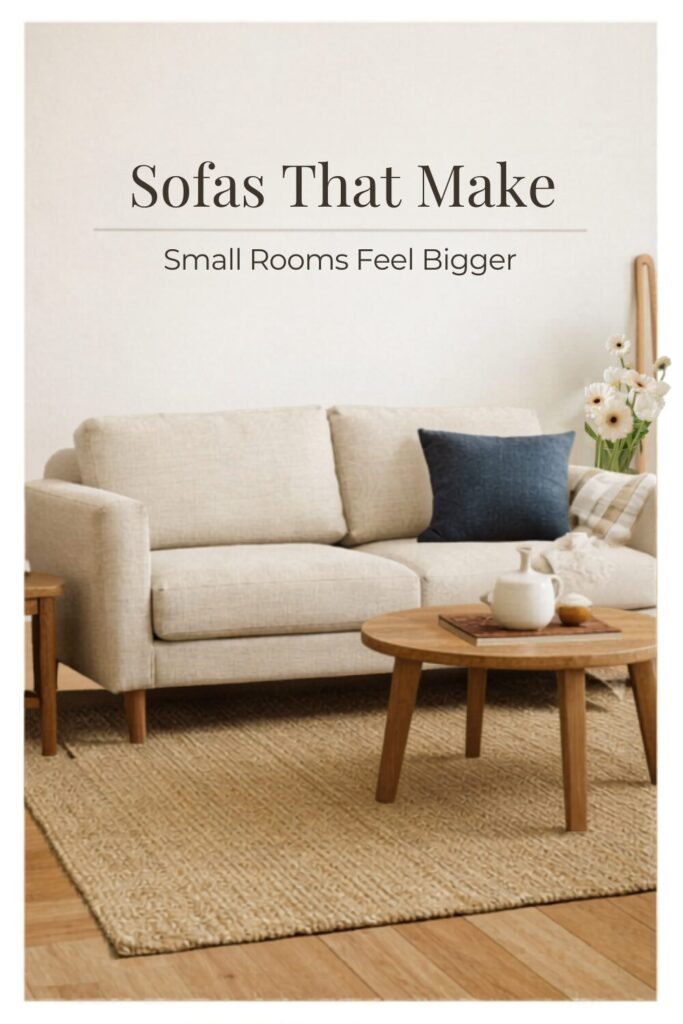
Your sofa is the most important purchase you’ll make for your small living room. Check out our sofa choosing guide below by clicking on the image.
6. Use Multi-Functional Pieces
Why it works:
Fewer items = less visual clutter.
What to do:
Think storage ottomans, nesting tables, or benches with hidden compartments.
Pro tip:
If a piece can serve two purposes, it earns its place.
7. Float Furniture Slightly Off the Walls
Why it works:
Pushing everything against the wall can actually make a space feel more cramped.
What to do:
Pull your sofa or chairs just a few centimeters forward to create subtle depth.
Pro tip:
Even a small shift can change how the room feels.
8. Layer Your Lighting
Why it works:
One overhead light creates flat, harsh lighting.
What to do:
Add a combination of floor lamps, table lamps, and soft ambient lighting.
Pro tip:
Think in layers: ambient, task, and accent.
9. Use Warm, Soft Lighting
Why it works:
Cool lighting can feel stark and clinical.
What to do:
Choose warm bulbs that create a softer, more inviting atmosphere.
Pro tip:
Lighting is one of the fastest ways to change how a room feels without changing anything else.
10. Maximize Natural Light
Why it works:
Natural light instantly opens up a space.
What to do:
Use sheer curtains or keep window treatments minimal.
Pro tip:
Avoid placing bulky furniture in front of windows.
11. Use Mirrors to Reflect Light and Space
Why it works:
Mirrors create the illusion of depth.
What to do:
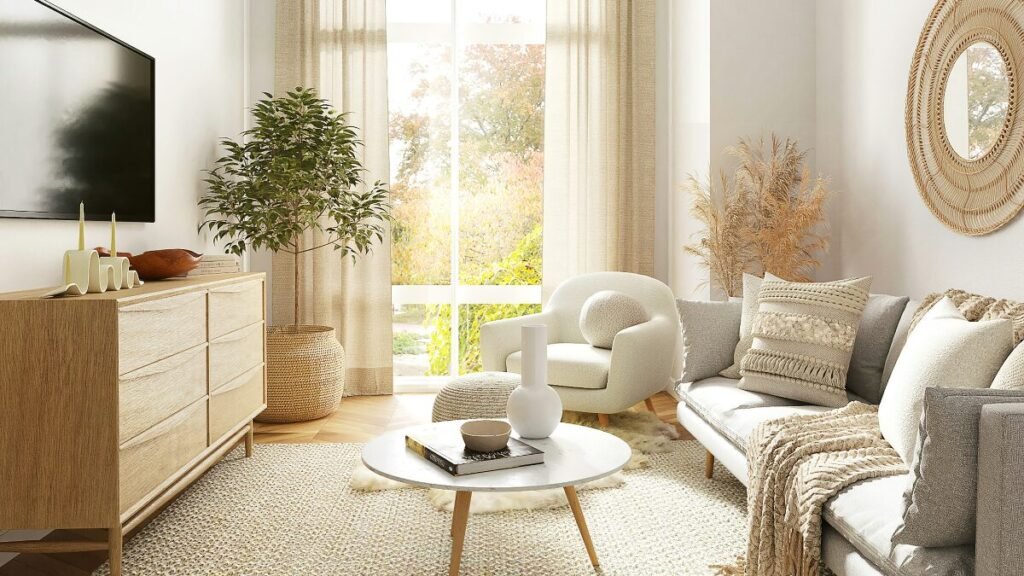
Place a mirror opposite or near a window to bounce light around the room.
Pro tip:
Larger mirrors tend to have a bigger impact than several small ones.

12. Define Zones with Rugs
Why it works:
Even small rooms benefit from subtle structure.
What to do:
Use a rug to anchor your seating area and define the space.
Pro tip:
Make sure the rug is large enough. If it is too small, the room will feel disconnected.
13. Draw the Eye Upward
Why it works:
Vertical lines make ceilings feel higher.
What to do:
Hang curtains higher than the window frame or add tall decor elements.
Pro tip:
Floor-to-ceiling curtains are one of the easiest upgrades.
14. Use Hidden Storage
Why it works:
Clutter is the fastest way to shrink a space visually.
What to do:
Choose furniture that conceals everyday items.
Pro tip:
Out of sight really does mean calmer mind.
15. Edit Your Decor (Less, But Better)
Why it works:
Too many items compete for attention.
What to do:
Remove anything that doesn’t serve a purpose or bring you joy.
Pro tip:
Leave space around objects. This is what creates that airy, styled look.
A Simple Styling Formula I Use
When I’m working with a small living room, I keep it very simple:
- Start with a neutral base
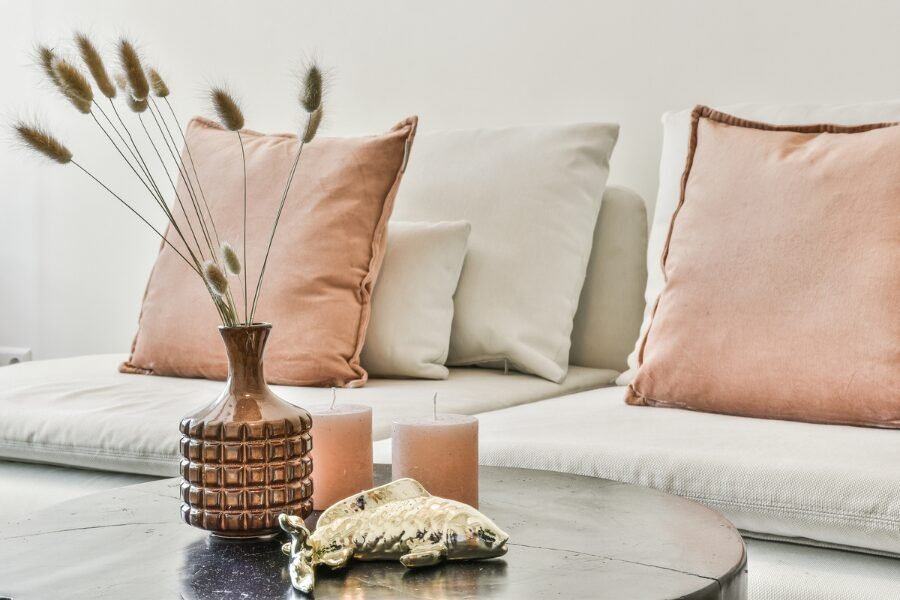
- Add 2–3 natural textures (linen, wood, woven elements)
- Layer in soft lighting
- Finish with a few intentional accents
That’s it. No overthinking. No overfilling.
Bringing It All Together
The real magic happens when these small changes work together.
A light palette, fewer but better pieces, soft lighting, and thoughtful placement can completely shift how your space feels.
It’s not about perfection; it’s about creating a room that feels easy to be in.
Start with just two or three of these ideas and build from there. You’ll be surprised how quickly your space begins to feel lighter, calmer, and more like home.