*This post may contain affiliate links for which I earn commissions.*
A small living room can easily feel crowded, cluttered, or difficult to style. I’ve been there — moving things around, trying different layouts, and still feeling like the space isn’t working.
But over time, I realised it’s not about finding one perfect piece. It’s about making a series of small, intentional decisions that work together.
When a space is small but smart, it starts to feel easier to live in. You move through it more comfortably. You spend less time adjusting things. And the room begins to feel calm instead of crowded.
In this guide, I’ll walk you through how I approach small living rooms in a practical, steady way. We’ll look at layout, furniture, storage, and decor—so you can build a space that feels both functional and settled.
You don’t need more ideas. You need a clear direction.
A Simple Starting Point
If your space currently feels cluttered or awkward, it helps to step back and simplify your approach.
Before moving anything around, I always focus on a few core principles:
- Start with the layout, not the furniture
- Keep pathways clear and easy to move through
- Choose fewer, better-sized pieces
- Use vertical space instead of adding more floor items
- Stick to a light, cohesive color palette
- Add furniture that does more than one job
- Keep surfaces visually calm
This gives you a structure to work within. It also removes the pressure to get everything perfect straight away.
You can build the room step by step.
Understanding Your Space Before You Change It
Before you start rearranging or buying anything, take a moment to really look at your space.
I don’t mean a quick glance. I mean, understanding how the room actually functions.
Ask yourself:
- Where do you naturally walk through the room?
- Where does light come in during the day?
- Which areas feel cramped or unused?
- What do you actually use the room for most?
A small living room often has to do more than one job. It might be where you relax, work, watch TV, and sometimes even eat.
That’s why a thoughtful layout matters so much.
If you try to copy a layout from a larger room, it usually won’t work. Your space needs its own solution.
Small Living Room Layout Ideas That Work
Layout is where everything begins. If the layout feels off, no amount of styling will fix it.
When the layout is clear, the room starts to feel settled.
The Floating Layout
One of the most common habits is pushing all furniture against the walls. It seems like it would create more space, but it often does the opposite.
Instead of pushing everything against the walls, try pulling your sofa slightly inward. Even a few centimeters can make the room feel more balanced. Also, leave some space between your sofa and side tables.
When everything lines the edges, the middle of the room can feel empty and disconnected.
This works well when:
- You have a narrow room
- You want to create a walkway behind the sofa
- You’re trying to define a seating area
It feels counterintuitive at first, but trust me, giving your walls some breathing room will make the whole space feel A LOT bigger.
The One-Wall Layout
In very tight spaces, simplicity works best.
Keeping your main furniture along one wall can reduce visual clutter and make the room easier to navigate.
You might have:
- A sofa against the wall
- A wall-mounted TV opposite
- One or two small side pieces
This approach keeps everything contained and avoids overcrowding the space.
The Zoned Layout
If your living room is part of an open-plan space, creating zones can help everything feel more organised.
You can do this without adding walls.
- A rug helps define the seating area
- The sofa can act as a soft divider
- A floor lamp or side table can anchor the space
Zoning gives structure to a room that might otherwise feel undefined.
Choosing Furniture That Fits the Space
Furniture is where many small living rooms start to feel heavy.
It’s easy to choose pieces based on how they look in a showroom, but scale is what really matters at home.
I always pay attention to proportions first.
What Makes Furniture Feel “Small-Scale”
Small-scale doesn’t mean tiny or uncomfortable. It means proportionate.
Look for:
- Sofas with slim arms instead of wide, bulky sides
- Raised legs that allow you to see the floor underneath
- Lower backs that don’t block sightlines
These details help the room feel more open.
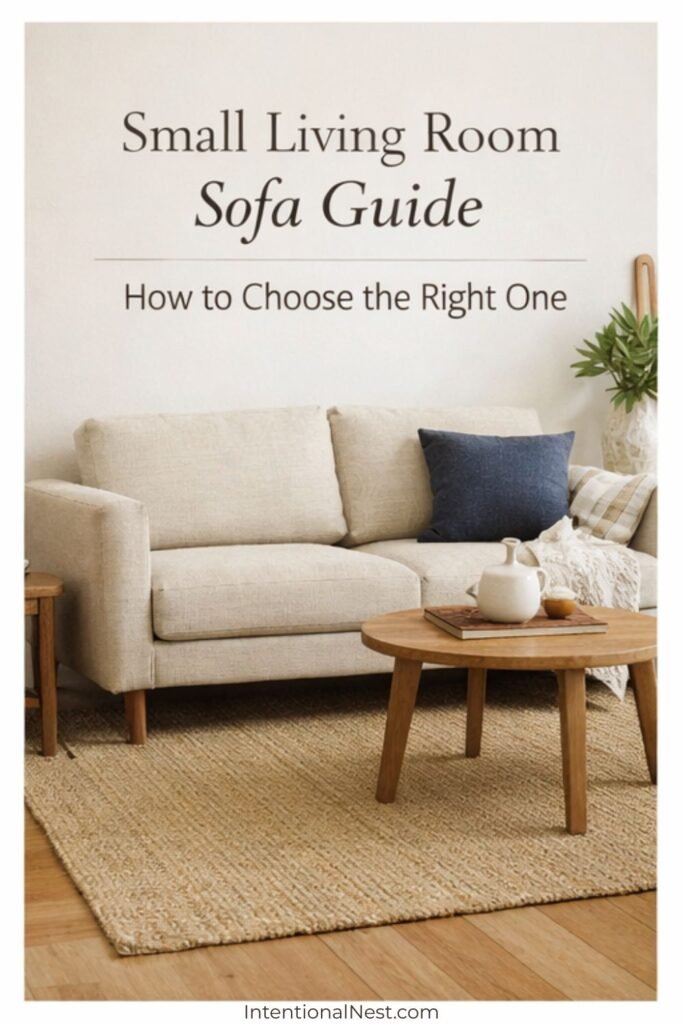
The Sofa Decision
Your sofa is the anchor of the room, so it’s worth getting this right.
In a small space, I usually avoid:
- Deep, oversized seating
- Heavy, boxy shapes
- Dark, dense fabrics
Instead, I look for something that feels light but still comfortable.
A well-sized sofa can make the rest of the room easier to plan.
But even if your sofa fits your small living room perfectly, it is only useful if it serves the room’s purpose. So, before you buy a sofa, decide what you want to get out of your living room.
Need help deciding? Then check out our How to Choose a Sofa Guide.
Flexible Alternatives to a Coffee Table
A traditional coffee table can take up more space than you expect.
If your room feels tight, consider alternatives:
- Nesting tables that can be moved when needed
- A storage ottoman that doubles as seating
- A slim bench that keeps the layout open
Flexibility is key in small spaces.
More Seating
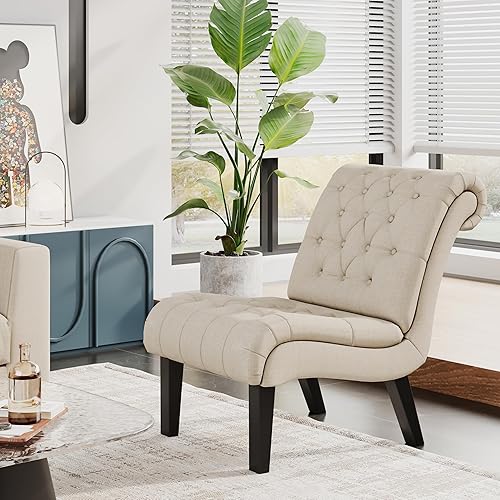
An armless accent chair is an easy and elegant way to add extra seating to a small living room without making the room feel crowded.
They take up less visual and physical space, which helps the layout stay open. They are especially useful in narrow rooms or near walkways.
Look for:
- Simple shapes
- Slim legs
- A slightly upright profile
You can tuck them closer to a sofa, angle them into a corner, or move them around as needed. They give you flexibility, which is exactly what a small but smart living room needs.
And if you want something really comfortable, then I like this chair from Amazon. Click through on the image to check it out for yourself.
Storage That Works Without Adding Weight
Storage is often where small living rooms become cluttered.
Clutter builds quickly in small spaces. That’s normal. The key is giving everything a place without making the room feel heavy.
I try to keep storage intentional and quiet.
Use Vertical Space First
If you’re running out of room on the floor, look up.
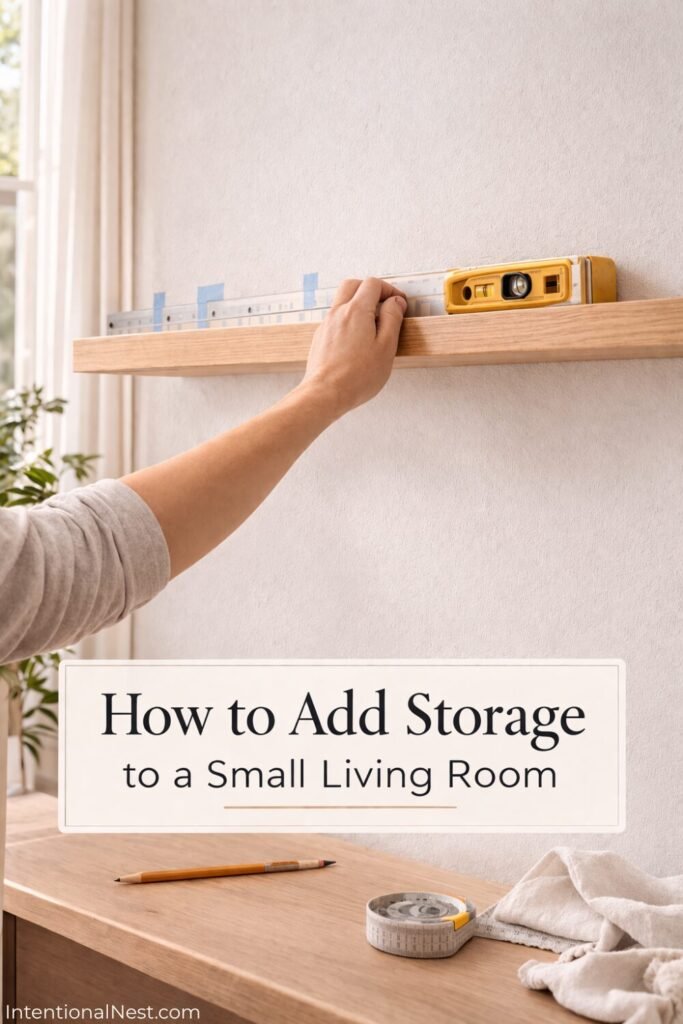
Wall-mounted storage can give you extra space without making the room feel crowded.
You might use:
- Floating shelves above the sofa
- Tall, narrow shelving units
- Wall-mounted cabinets
This keeps the footprint light while adding function.
Balance Open and Closed Storage
Not everything needs to be visible.
Closed storage helps hide everyday items, while open shelves can hold a few carefully chosen pieces.
Too much open storage can feel busy, so I usually keep it limited.
Choose Dual-Purpose Pieces
In a small living room, furniture should do more than one job.
This might include:
- Storage ottomans
- Benches with hidden compartments
- Coffee tables with drawers or storage
These pieces help reduce the need for extra furniture.
Creating a Calm Color and Material Palette
Color and materials play a quiet but important role in how a room feels.
You don’t need a strict color scheme. You just need consistency.
Keep Colors Cohesive
When too many colors compete, the room can feel smaller.
I prefer to work with a simple palette:
- Warm whites
- Soft neutrals
- Light wood tones
This keeps everything visually connected.
Let Natural Light Do the Work
Light makes a significant difference in how a space feels.
If your windows allow it, keep coverings light and simple.
- Sheer curtains
- Light-filtering fabrics
- Minimal layering
Heavy curtains can make a room feel closed in.
Add Texture Instead of More Items
If the room feels flat, it’s tempting to add more decor.
Instead, I focus on texture.
- Linen cushions
- Woven rugs
- Natural wood surfaces
This adds interest without creating clutter.
Decorating in a Way That Feels Intentional
Decor is where things can easily go too far. In a small space, more decor doesn’t make the room better. It usually makes it feel crowded.
I approach decor with restraint.
To begin decorating, it’s wise to assess the items you already own. Most of us possess more than we realize, and we can often reuse beloved belongings to craft a warm and inviting atmosphere.
Keep Surfaces Simple
A coffee table doesn’t need many items, and a shelf shouldn’t be overstyled.
I usually stick to:
- One tray
- A book or two
- One or two decorative objects
Uniquely showcase your collections. Rather than grouping all your collections on a single shelf, think about showcasing them as decorative accents throughout your room.
By placing them thoughtfully in different areas, they become interesting focal points that invite the eye to explore comfortably, creating a sense of spaciousness.
Be Careful With Wall Art
Wall art can either anchor the room or make it feel busy.
Instead of many small pieces, I prefer one larger piece above the sofa. It creates a focal point without adding visual clutter.
Alternatively, I love a well-curated gallery wall. To avoid visual clutter with a gallery wall, choose frames with a similar finish or images in a similar style or color scheme. You want to create a cohesive, calm, and sophisticated look.
Use Plants Thoughtfully
Plants can bring life into a room, but too many can feel overwhelming.
One or two well-placed plants are often enough.
Common Mistakes That Make Small Living Rooms Feel Smaller
There are a few patterns I see often, and they tend to have the same effect.
- Choosing furniture that’s too large for the room
- Adding too many small items that create visual clutter
- Relying on poor or single-source lighting
- Using heavy fabrics that block light
- Arranging furniture without a clear layout
If your space feels off, it’s usually worth revisiting these.
Small adjustments can make a noticeable difference.
Real-Life Small Living Room Patterns That Work
When I look at small living rooms that feel calm and functional, they tend to follow similar patterns.
They’re not complicated. They’re just well thought out.
You’ll usually notice:
- A clear, simplified layout
- Furniture that fits the scale of the room
- Storage that’s built into the design, not added later
- A restrained approach to decor
It’s not about having more ideas. It’s about choosing the right ones and following through.
A Practical Action Plan You Can Follow
If you want to move forward without overthinking everything, I suggest working in this order:
- Start by measuring your space properly. Knowing your dimensions helps avoid costly mistakes.
- Choose a layout that suits the shape of your room. This becomes your foundation.
- Next, anchor the room with the right sofa. Once that’s in place, everything else becomes easier.
- Add storage that supports your daily life without taking over the room.
- Finally, layer in lighting, textiles, and a few decorative pieces.
Take your time with each step. You don’t need to finish everything in a weekend.
Final Thoughts
A small living room doesn’t have to feel limiting. With a thoughtful layout, functional choices, and a calm approach to styling, it can become one of the most comfortable spaces in your home.
I’ve found that when a room is simplified and intentional, it naturally starts to work better.
You move through it more easily. You spend less time adjusting things. And the space begins to support your daily life instead of getting in the way.
Start with your layout. Keep your choices clear and considered, and let the room come together gradually.