
*This post may contain affiliate links for which I earn commissions.*
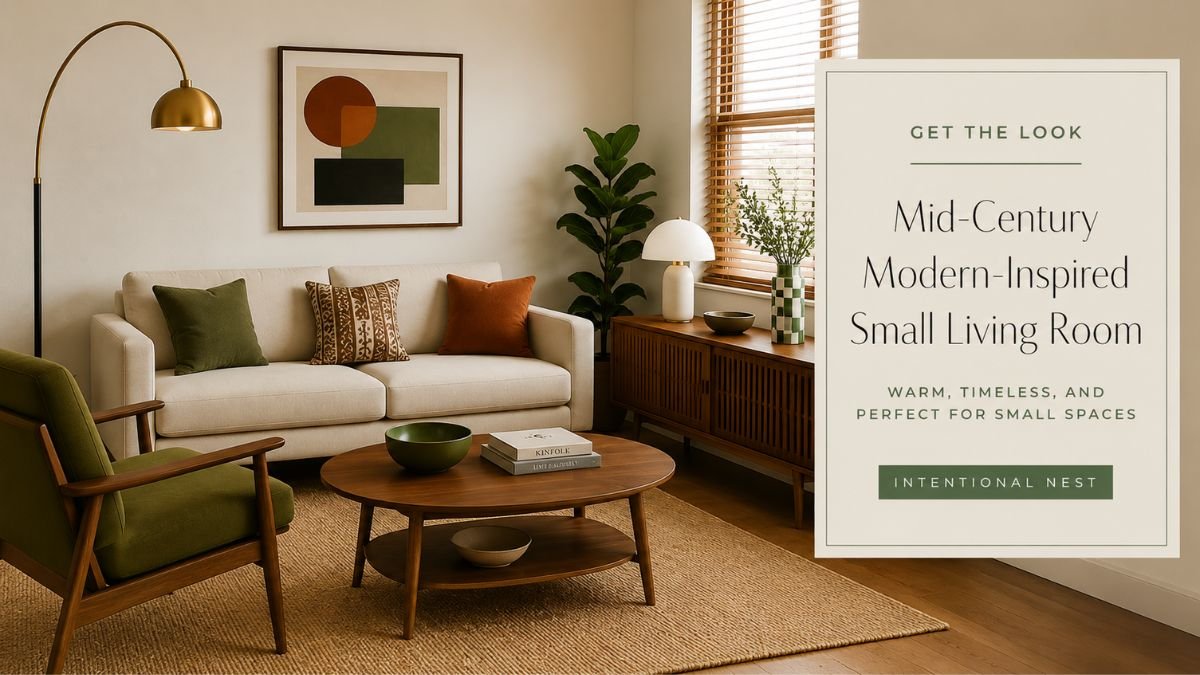
A small living room doesn’t need much furniture to have personality. The qualities that make mid-century modern design so appealing- clean lines, raised legs, warm wood, simple strong shapes- happen to suit compact spaces especially well.
The trick is not to recreate the 1950s. Too many recognizable retro pieces, bold patterns, and vintage colors in one room start to feel like a theme rather than a home.
Instead, borrow the parts of mid-century design that still work beautifully today: a streamlined sofa, walnut furniture, an open-frame accent chair, sculptural lighting, graphic artwork, and a controlled dose of earthy color.
The result should feel warm and characterful rather than nostalgic, stylish enough to feel considered, comfortable and practical enough for everyday life.
Here’s how to bring the look into a small living room.
The Look at a Glance
Style: Warm mid-century modern
Color palette: Warm white, walnut brown, olive green, rust, cream, and charcoal
Key materials: Walnut, linen, wool, ceramic, glass, metal, and natural woven fibers
Overall mood: Warm, streamlined, collected, and inviting
Best for: Small apartments, compact living rooms, and modern homes that need a little more character
The finished room should feel interesting without feeling busy, warm wood against a simple backdrop with enough negative space for each piece to stand out.
Shop the Look
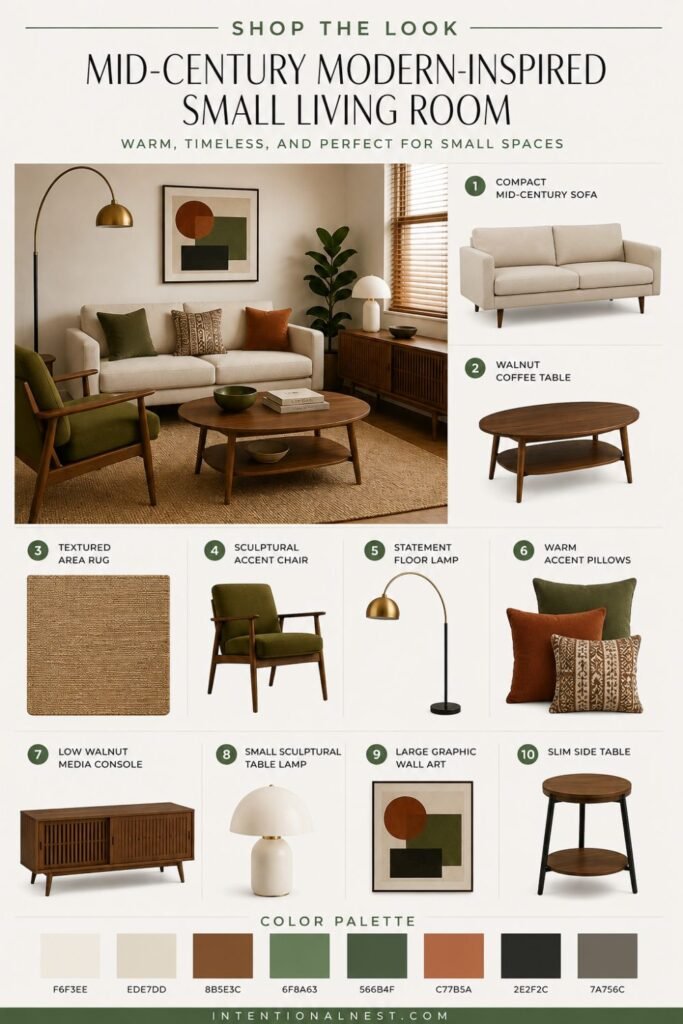
To recreate this warm mid-century modern-inspired living room, start with the larger furniture pieces and add the decorative layers once the room works functionally.
1. Compact Mid-Century Sofa
Look for a cream or warm neutral sofa with slim arms, raised tapered legs, and a structured silhouette. Keep the overall depth appropriate for your room. For inspiration, have a look at these best-selling mid-century sofas on Amazon.
2. Walnut Coffee Table
An oval walnut table adds warmth and softens the straight lines of the sofa. A lower shelf provides useful additional storage without making the piece feel bulky.
3. Textured Area Rug
Choose a warm tan, oatmeal, or natural-textured rug large enough to anchor the entire seating area.
4. Sculptural Accent Chair
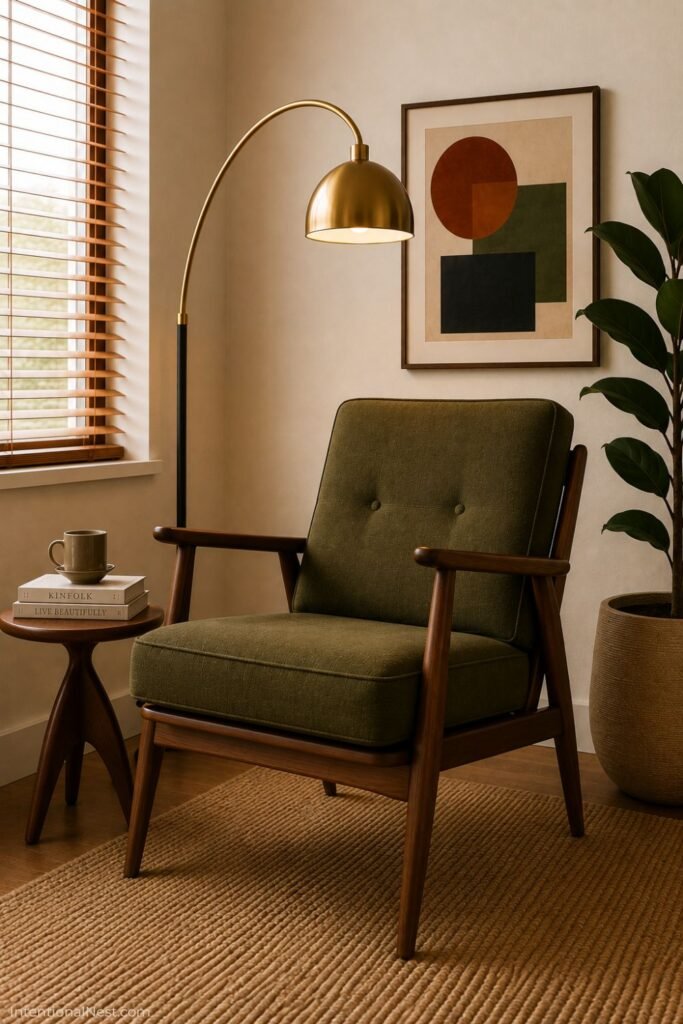
An olive upholstered chair with exposed wood arms and legs adds color and character while maintaining an open visual profile.
5. Statement Floor Lamp
A slim arc lamp with a brass or warm metal shade creates a sculptural curve and useful task lighting without taking up much floor space.
Items to build the room…


6. Warm Accent Pillows
Use two or three pillows to bring in olive, rust, and one subtle pattern. Keep the rest of the sofa relatively simple.
7. Low Walnut Media Console
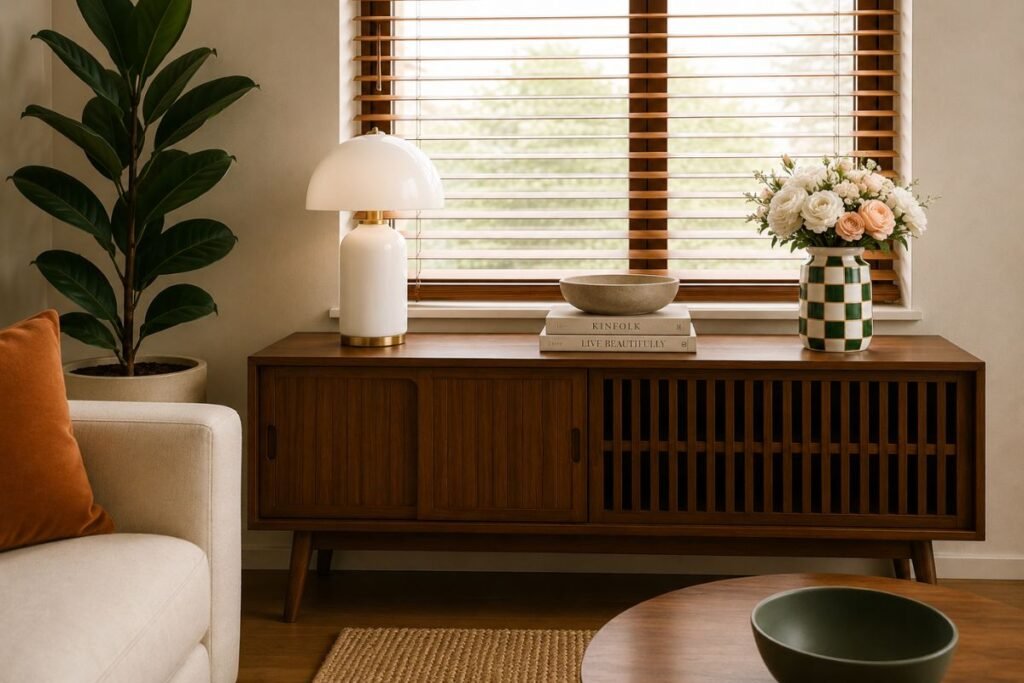
Choose a streamlined console with closed storage and raised legs. A slatted or lightly detailed front can add interest without requiring extra decor.
8. Small Sculptural Table Lamp
A compact white mushroom table lamp adds soft contrast against dark walnut and provides another layer of warm evening light.
9. Large Graphic Wall Art
Choose one substantial abstract artwork using a restrained mix of warm brown, rust, olive, cream, and charcoal.
10. Slim Side Table
A small round table with walnut surfaces and a dark frame provides useful space beside the chair without taking up much visual or physical room. The one below is popular, but if you prefer solid wood and are willing to spend the extra money, this Martin Svensson Home side table is a winner.
Items to finish the look…


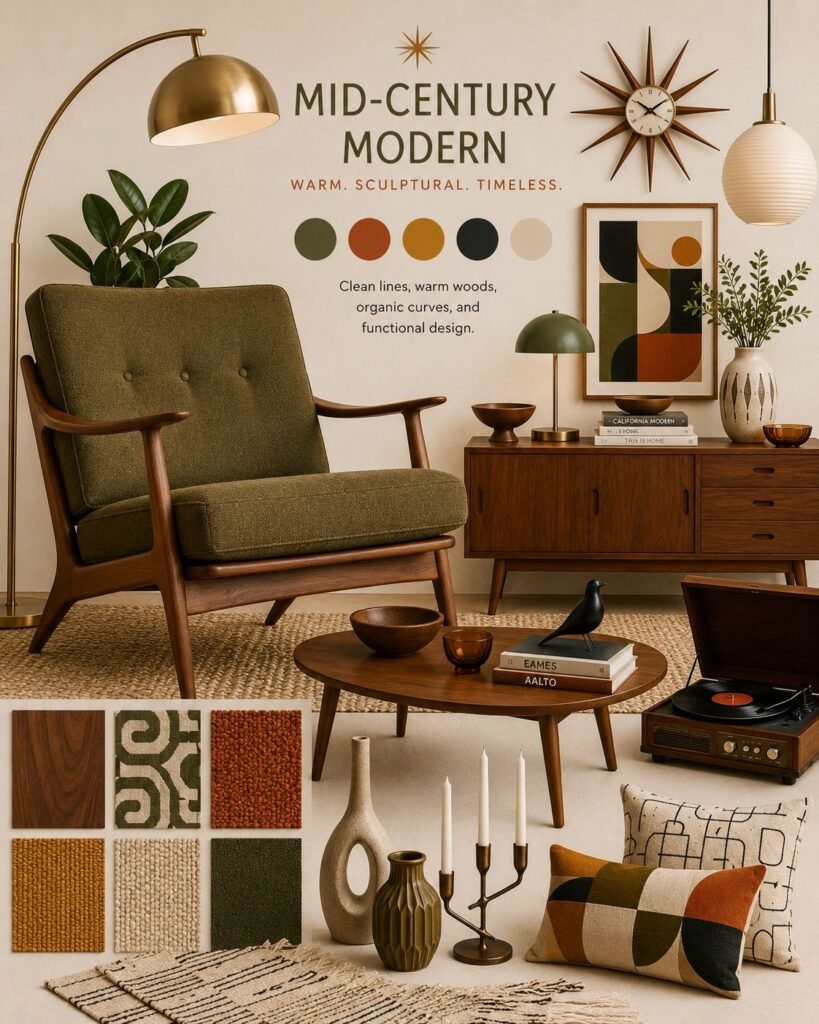
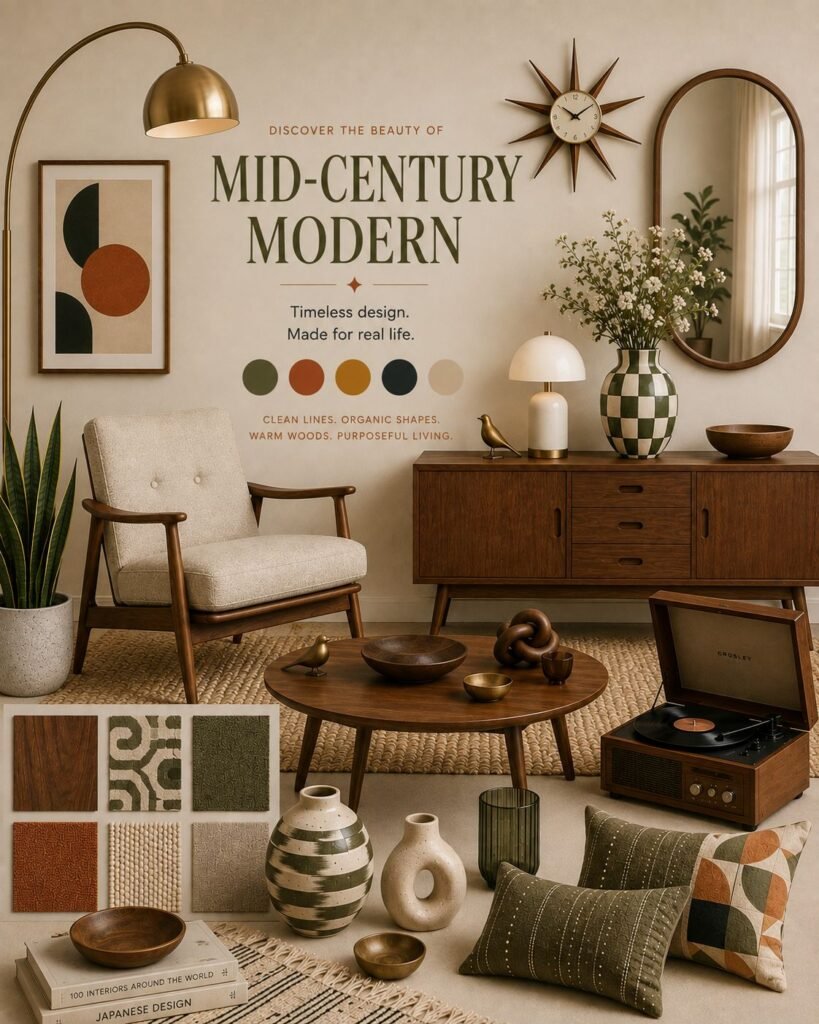
Mid-Century Modern Mood Board
Save this Mid-Century Modern mood board for your next living room refresh.
Walnut wood, olive green, rust, mustard, brass, sculptural furniture, geometric artwork, and warm neutrals come together to create a timeless Mid-Century Modern look that works beautifully in a small living room.
Pulling The Look Together
Putting this look together is easier than you might think.
Start With a Warm, Simple Foundation
Mid-century rooms lean on rich wood tones and strong colors, so a quiet architectural backdrop keeps everything balanced.
Warm white, cream, pale beige, or soft greige walls reflect light without feeling stark, letting walnut furniture, olive upholstery, and rust accents stand out.
Wood flooring works naturally with this style, but almost any flooring can be softened with the right rug. On dark flooring, a light rug keeps the space from feeling weighty. With pale floors, bring in medium to deep-toned wood furniture to add warmth and definition.
Keep window treatments simple. Linen-look curtains, woven shades, or streamlined blinds work well without competing with the stronger shapes elsewhere in the room.
The goal is to create a backdrop, not another focal point.
Choose a Sofa With Clean Mid-Century Lines
The sofa is usually the largest piece in a small living room, so its proportions matter more than any “mid-century” label.
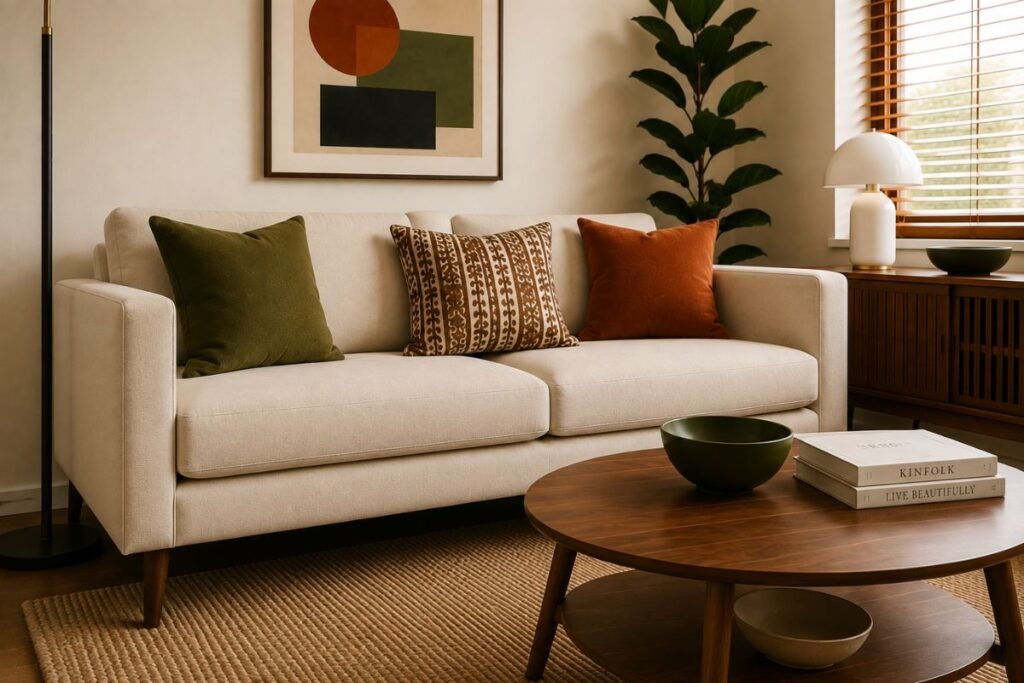
Look for a simple silhouette with slim arms, a structured seat, and visible legs. A sofa raised slightly off the floor exposes more of the room beneath it, which can make a compact space feel lighter.
Cream, oatmeal, beige, warm gray, camel, and muted olive all work well; go neutral, and you’ll have more room to play with color elsewhere.
For more help getting the scale right, read our guide to choosing a sofa for a small living room.
Your sofa doesn’t need to be a mid-century reproduction. A contemporary piece with the right proportions gives you a far more flexible starting point.
Bring in Warm Wood
Walnut is one of the easiest ways to establish a mid-century-inspired look.
Its darker, warmer tone adds contrast to pale walls and neutral upholstery without feeling as visually heavy as very dark brown or black furniture.
Use it selectively rather than filling the entire room with matching pieces.
A walnut coffee table is the obvious starting point. Oval and softly rounded shapes work especially well in a small room because they soften the hard corners around your main walkway, and a lower shelf gives you somewhere useful for books or a tray.
Repeat the wood tone in a console or side table so the room feels connected.
The pieces do not need to match exactly. Similar warm brown undertones are usually enough to create continuity.
Mix Straight Lines With Sculptural Curves
Mid-century rooms feel visually interesting because of the contrast between simple architectural lines and sculptural furniture.
A rectangular sofa can sit beside an oval coffee table. An arched floor lamp offsets the sharp lines of a minimalist console and a boxier piece of upholstery can sit opposite a chair with an open wood frame.
This mix works especially well in a small room, since it lets individual pieces carry character without extra decoration.
Pick one or two shapes that stand out rather than making every piece a statement. An oval coffee table and a sculptural lamp, for example, may be enough.
The stronger your furniture silhouettes, the less you need around them.
Build a Warm Mid-Century Color Palette
Mid-century modern permits you to use more color than many neutral decorating styles, but a small living room still benefits from restraint.
A simple starting point is:
- 60%: warm white, cream, beige, or another light neutral
- 30%: walnut, warm brown, oatmeal, or camel
- 10%: olive green, rust, burnt orange, ochre, deep teal, or charcoal
You don’t need every accent color in the same room.
For this look, olive and rust make a particularly good pairing. Olive has the depth to stand out against warm neutrals, while rust plays naturally off walnut.
Repeat your accent colors rather than constantly introducing new ones. An olive chair can echo an olive pillow or a patch of color in the artwork. A rust pillow can pick up the warm brown and orange tones elsewhere in the room.
That repetition is what makes a small space feel intentional instead of busy.
Layer Texture Without Adding Clutter
A tightly controlled color palette still needs texture.
A woven rug, a textured sofa, visible wood grain, and one ceramic lamp already give you plenty of variety, no extra accessories required.
Stick to materials that feel tactile rather than decorative: wool, linen, bouclé, leather, cane, matte ceramics.
Pattern works too, but use it sparingly. A single geometric or block-print pillow adds more personality than several competing prints.
You want the room to feel layered up close, not look crowded from the doorway.
Add a Statement Accent Chair
If you have room for one more seat, let the accent chair carry some personality.
An open-frame mid-century modern chair with wooden arms and legs slightly angled toward the sofa is ideal for a compact living room because there is visible space around and underneath it.
Olive green works beautifully for this look, particularly against cream upholstery and walnut furniture. Camel, rust, oatmeal, and warm gray are other options.
Use Lighting as Part of the Design
Mid-century-inspired lighting deserves to be seen.
If you have room beside the sofa or reading chair, a gold arc floor lamp adds both height and a strong sculptural curve.
Layer it with a smaller table lamp on a console or side table. A compact small white mushroom table lamp softens the darker walnut furniture and adds a warm pool of light in the evening.
Several light sources at different heights will almost always make a small living room feel warmer and more inviting than one bright overhead fixture.
Choose warm-toned bulbs and keep cords as unobtrusive as possible.
Ground the Room With the Right Rug
The rug is what visually ties the furniture together.
A natural jute area rug is an easy way to bring warmth and texture into the room while allowing the walnut furniture and colored accents to remain the focus.
Size matters more than pattern. The rug should be large enough for the front legs of the sofa and accent chair to sit comfortably on it.
If you want something more decorative, look for a restrained geometric or vintage-inspired pattern in cream, tan, olive, rust, or brown rather than a highly contrasting design.
Style the Coffee Table Simply
A beautiful coffee table still needs to function as one, so leave plenty of the surface clear.
Try a small stack of books, one shallow bowl, and perhaps a single decorative object. A low grouping maintains clear sightlines across the room and keeps the arrangement from feeling fussy.
This is a good spot to repeat materials from elsewhere in the room, a dark olive bowl echoing the accent chair, book covers picking up the palette.
Choose Storage That Looks Like Furniture
Mid-century storage is especially useful in small spaces, since it combines practical cabinetry with streamlined proportions.
A low walnut media console can hide cables, electronics, games, and other everyday clutter while still working as one of the room’s major design pieces.
Look for a console with raised legs and simple doors rather than a bulky unit sitting directly on the floor.
Closed storage earns its keep here; not everything needs to be on display.
Keep the items you use often but don’t love looking at behind closed doors, then style the top with just a few pieces, a small white mushroom table lamp, a bowl, or a green-and-white checkered vase.
Add Art With Graphic Personality
Artwork is an easy way to make the room feel distinctly mid-century without committing to highly stylized furniture.
Abstract, geometry-based pieces are a strong choice. Choose clean blocks, circles, arches, and overlapping forms in hues that echo the room’s existing palette.
A single large artwork above the sofa usually works better in a small room. It gives the eye a clear focal point and helps the wall feel composed rather than fragmented.
Bring in a Little Greenery
One medium or large plant is often enough. A leafy plant beside the console, sofa, or window adds height and softens the straight lines in the room, no extra furniture required.
Choose a simple pot in ceramic, terracotta, or another quiet finish.
If maintaining plants isn’t realistic for your home, you can skip this element completely. Warm wood, natural fibers, and earthy colors already bring plenty of organic character into the room.
Create a Mid-Century Reading Corner
Place your accent chair close enough to the floor lamp for comfortable reading and add the slim side table for a drink, book, or phone.
That’s enough. The reading corner doesn’t need its own rug, shelving unit, basket, or collection of accessories.
In a small living room, the best zones often overlap. Your accent chair can be part of the main conversation area during the day and become the reading chair in the evening.
How to Make Mid-Century Modern Work in a Small Living Room
The biggest mistake is assuming a small room needs lots of very small furniture. Too many undersized pieces actually create more visual clutter than a few well-proportioned ones.
Start by figuring out what the room genuinely needs. Usually that means comfortable seating, a rug to pull it all together, a useful surface, lighting, and enough storage to keep clutter contained.
Then give those pieces enough room to breathe.
Furniture with exposed legs helps because more of the floor remains visible. Rounded tables improve circulation around tight seating arrangements. Closed storage reduces visual noise.
Resist the temptation to include every recognizable mid-century element at once. You do not need a starburst mirror, mustard sofa, teak sideboard, geometric curtains, globe chandelier, orange rug, sculptural chair, and vintage accessories all in the same room.
Pick three or four strong references instead. For example: walnut furniture + an open-frame chair + sculptural lighting + graphic artwork.
Let the rest of the room stay simple. The restraint is what keeps the look feeling current.
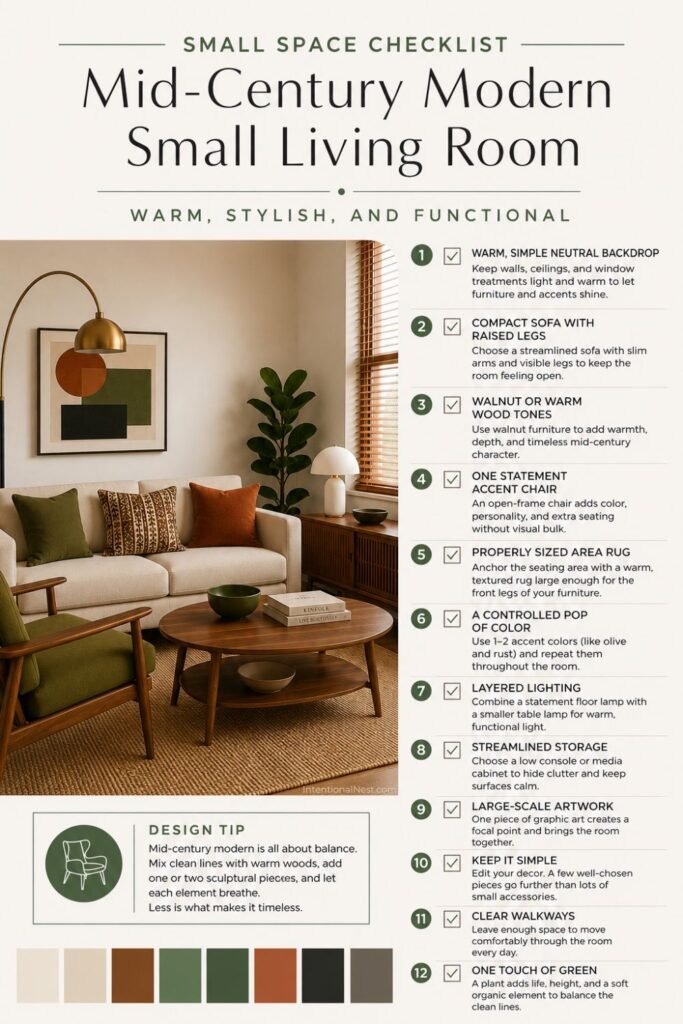
Mid-Century Modern Small Living Room Checklist
Use this checklist as a quick guide when putting the room together:
Final Thoughts
A mid-century modern-inspired small living room isn’t about creating a period-perfect interior.
It’s about borrowing the parts of the style that continue to work exceptionally well: good proportions, functional furniture, warm wood, clean lines, interesting shapes, and a thoughtful use of color.
Start with the pieces that shape your everyday comfort: a correctly sized sofa, useful storage, a good rug, and practical lighting.
Then build the visual character gradually. Add a walnut coffee table. Introduce an olive chair or rust pillow. Hang one strong piece of graphic art. Use a sculptural floor lamp to bring height and shape into the room.
Then stop before every surface and corner is filled.
The best mid-century-inspired small rooms feel warm and distinctive without looking like a theme, stylish without being precious, characterful without being crowded, and comfortable enough to use every single day.
More Shop the Look Styles
For more shop the look style inspiration, check out these: