
*This post may contain affiliate links for which I earn commissions.*
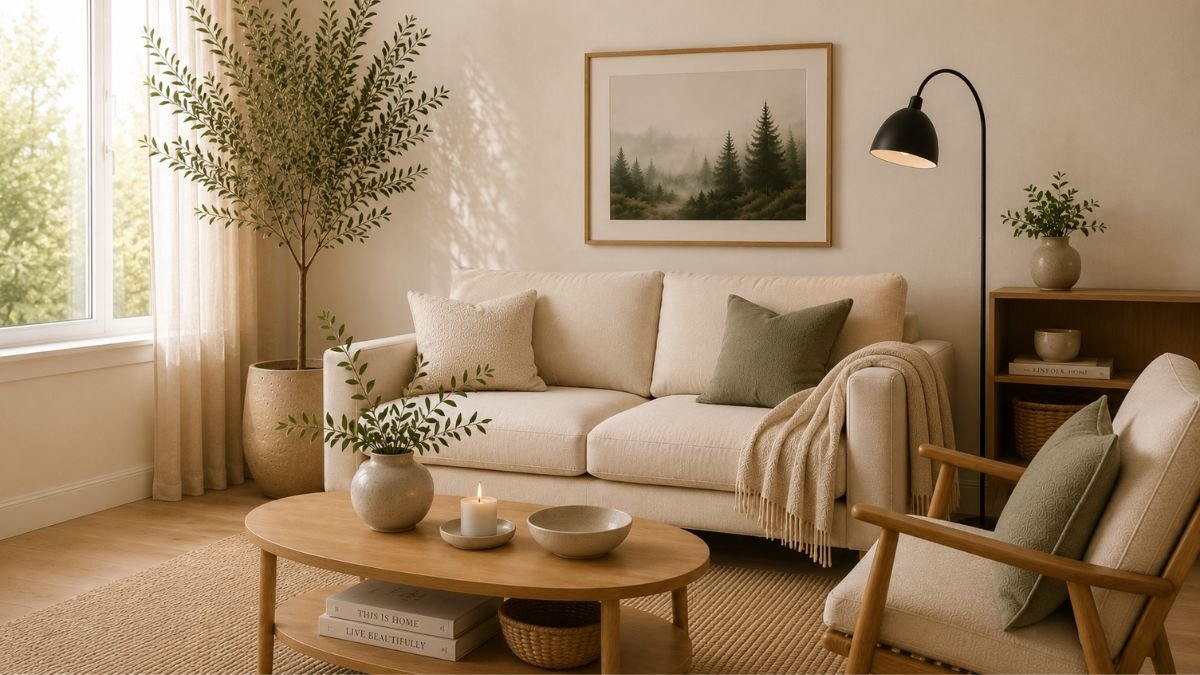
A small living room doesn’t have to feel crowded, cold, or stripped-down to work. Scandinavian style, done well, gives you the opposite: a soft neutral palette, light wood, natural texture, and just enough decor to feel calm rather than bare.
The trick isn’t removing everything decorative or reaching for stark white furniture. It’s simplicity with warmth. Every piece earns its place, but the room still feels lived-in and personal. It’s not styled within an inch of its life.
This look is especially suited to small spaces because it leans on natural light, breathing room, and furniture with clean, space-saving lines. Whether you’re working with a compact apartment or refreshing a small family room, here’s how to put it together.
The Look at a Glance
Style: Warm Scandinavian
Color palette: Warm white, oatmeal, soft beige, pale gray, light wood, and muted green
Key materials: Linen, wool, oak, ceramic, glass, and woven fibers
Overall mood: Calm, cozy, light, and uncluttered
Best for: Small apartments, compact living rooms, and open-plan spaces
The finished room should feel simple but not bare, cozy but not crowded, and styled without looking overly arranged.
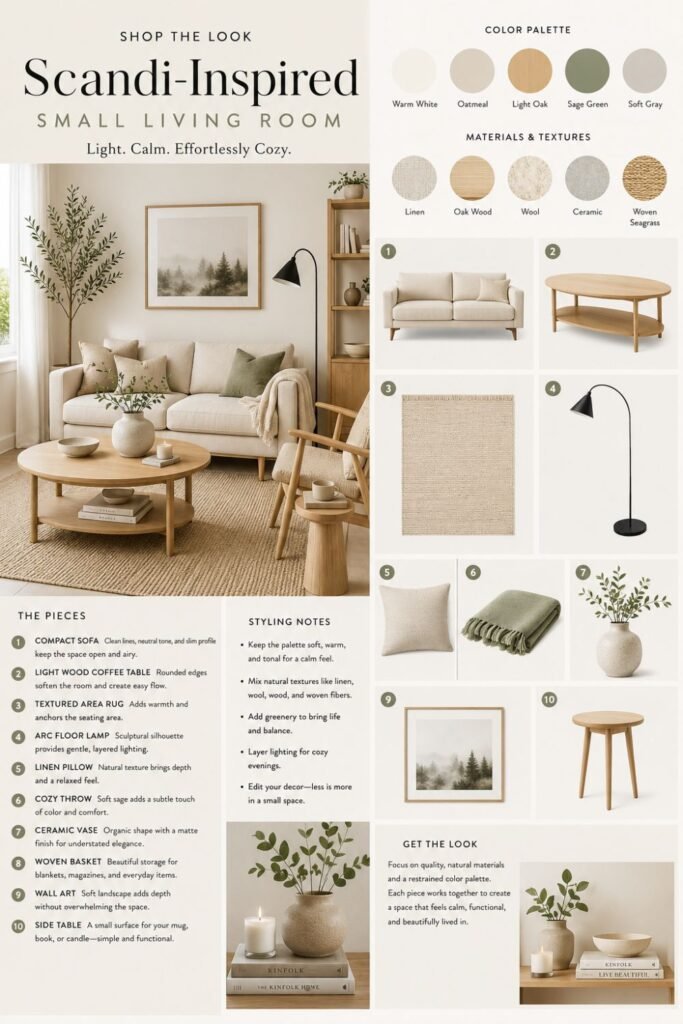
Shop the Look
To recreate a warm, Scandi-inspired small living room, begin with the larger foundation pieces and then add decorative layers gradually.
1. Compact Neutral Sofa
Look for a simple sofa in oatmeal, beige, warm gray, or cream. Slim arms and raised legs will help it feel lighter in the room. Find the right sofa for your look here on Amazon. To narrow down your search for the right sofa, choose the type, dimensions, material and capacity to the left of the page.
2. Light Wood Coffee Table
Choose an oval, round, or softly rectangular table in pale oak or a similar natural finish. A lower shelf adds practical storage.
3. Textured Area Rug
A large ivory, oatmeal, or lightly patterned natural textured area rug can anchor the seating area while reinforcing the room’s warm, understated palette.
4. Sculptural Floor Lamp
A curved or tripod-style floor lamp creates height and provides soft evening lighting. Look for linen, paper, glass, or matte metal details.
This simple black arc floor lamp introduces just enough contrast while providing useful light beside the sofa or reading chair.
Items to build the room…


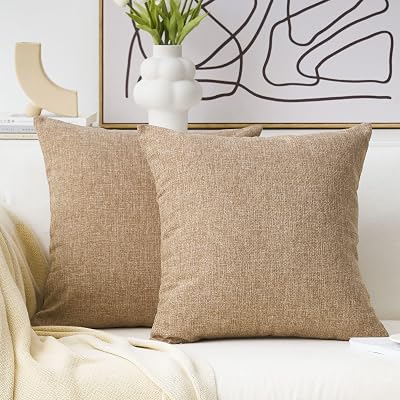
5. Linen-Style Pillows
Select two or three pillows in closely related tones. Mix plain linen with subtle woven, striped, or textured designs.
6. Soft Throw
A cotton or wool-look throw adds comfort and can introduce a small amount of muted color. Introduce one muted accent through something easy to change, such as this soft sage green throw.
7. Ceramic Vase
Choose a matte or handmade-looking vase with a simple silhouette. Style it with one leafy branch or a few seasonal stems.
8. Woven Basket
Use a natural basket to store blankets, magazines, or everyday items that would otherwise create clutter.
9. Minimal Wall Art
A large print or textile piece in a soft, restrained palette will give the wall a focal point without overwhelming the room.
10. Slim Side Table
A compact side table provides a useful surface without taking up much floor space. Look for a design that repeats the coffee table’s wood tone.
Items to finish the look…


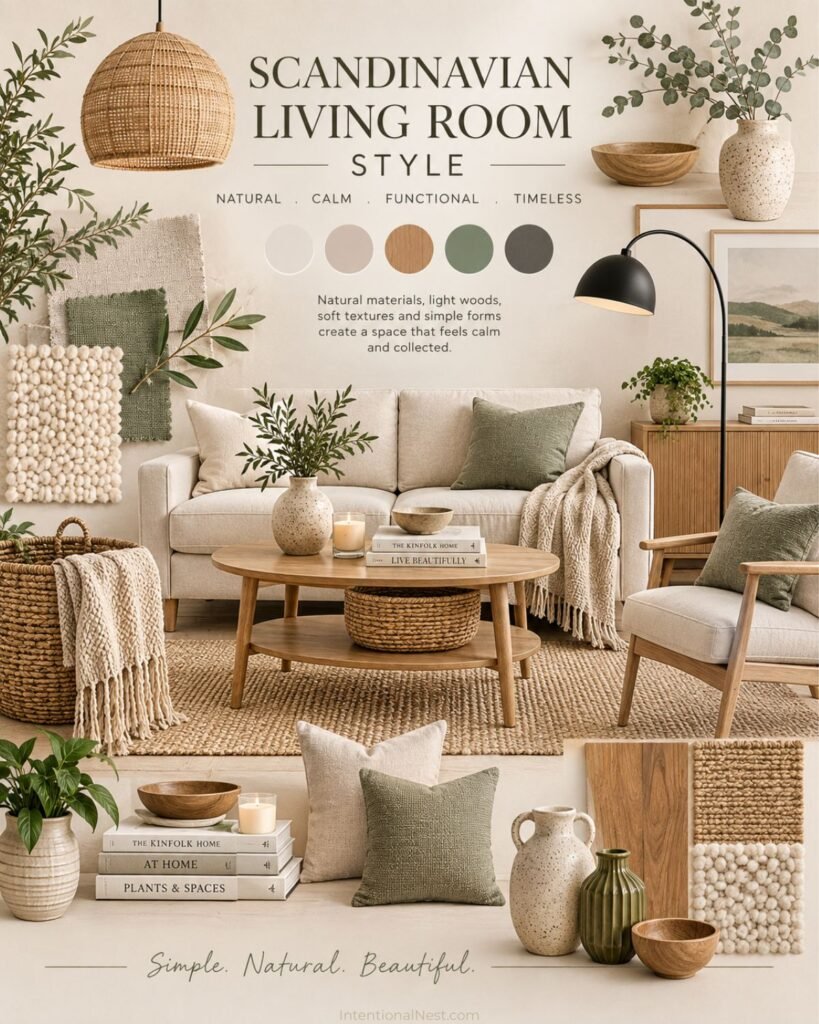
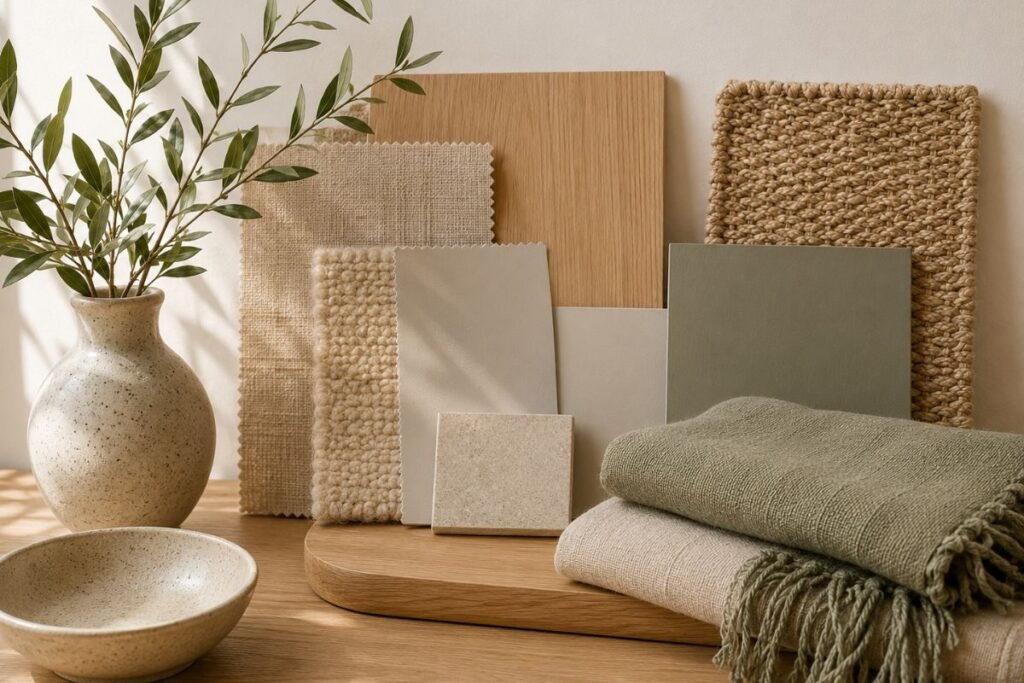
Scandinavian Mood Board
Save this Scandinavian mood board for your next living room refresh.
Pair cream upholstery with light oak pieces, natural weaves, muted sage accents, simple ceramics, greenery, soft fabrics, and pared-back decor to achieve a Scandinavian look that makes the living room feel bright, serene, and cozy with lasting appeal.
Pulling The Look Together
Putting this look together is easier than you might think.
Start With a Warm, Light Foundation
The foundation of a Scandi-inspired living room is usually light and neutral, but that does not mean it needs to feel stark.
Begin with warm white, soft cream, or pale greige walls. These shades help reflect natural light while creating a softer backdrop than a bright, cool white. They also work beautifully with light wood furniture, woven materials, and neutral upholstery.
If you have wood flooring, let it do some of the work. Pale oak and ash finishes suit this look naturally. Darker floors or a rental situation? A large oatmeal or ivory area rug softens things visually.
Choose curtains that let daylight filter through. Sheer or linen-look panels hung close to the ceiling add gentle movement and make the room feel taller.
The goal is a quiet backdrop that lets shape, material, and texture do the talking.
Choose a Sofa With a Light Visual Profile
In a small room, your sofa sets the tone for how spacious everything feels. Look for something compact with slim arms, a simple silhouette, and raised legs. Visible floor beneath it opens the room up instead of weighing it down.
Neutral upholstery in beige, oatmeal, warm gray, or ivory works well, ideally in a tightly woven fabric that can handle daily life better than something delicate and loosely woven.
Skip anything just because it’s marketed as “apartment-sized.” Measure your actual space, including walls, doorways, and walkways, before you commit.
A two- or three-seat sofa is usually more flexible than a bulky sectional, though a well-proportioned small sectional can still work if it respects the room’s flow.
What to Look For in a Small-Space Sofa
Choose a sofa with:
- Slim or gently rounded arms
- Raised wood or metal legs
- A low or medium-height back
- Firm but comfortable cushions
- Neutral, textured upholstery
- A depth that does not overwhelm the room
- Enough seating for your household without unnecessary bulk
A simple sofa creates the visual anchor for the room while leaving space for lighter accent pieces.
For more on how to choose the right sofa for your small living room, check out our guide here.
Add Light Wood Furniture
Light wood, whether it’s oak, ash, or birch, brings natural warmth into a neutral room and is one of the most recognizable elements of Scandinavian-inspired design.
An oval or round coffee table is easier to move around than a large rectangular one, and curved edges soften a room full of straight walls and boxy furniture. A lower shelf adds handy storage for books and baskets; nesting tables give you flexibility to separate or tuck away as needed.
For media storage, go low and streamlined instead of tall and bulky. A wall-mounted console frees up floor space, while a narrow freestanding unit hides clutter without dominating the room.
One tip that makes a real difference: repeat the same wood tone throughout. Mixing too many finishes reads as visually busy in a small space.
Layer Soft, Natural Textures
A restrained palette needs texture to feel warm and interesting instead of flat.
Rather than adding bold color, layer materials similar in tone but different in finish. Think linen sofa, wool-look rug, knitted throw, woven basket, and matte ceramic vase.
Start with a rug large enough to anchor the seating area. At minimum, the front legs of your sofa and chairs should sit on it. Too small a rug makes furniture look disconnected and can shrink the room visually.
Add two or three pillows in related tones and varied textures, like plain linen paired with a subtle stripe or boucle. Drape a throw casually over the sofa arm or tuck it into a basket.
Natural texture can also come from smaller details, including:
- Woven storage baskets
- Ribbed or speckled ceramics
- Linen lampshades
- Wooden trays
- Handmade bowls
- Soft wool or cotton textiles
- Cane or rattan accents
The room should feel tactile and comfortable, not flat or showroom-perfect.
Keep the Color Palette Calm
A good rule of thumb for balance:
- 60%: warm white, cream, or soft beige
- 30%: light wood, oatmeal, taupe, or pale gray
- 10%: muted green, dusty blue, terracotta, or charcoal
Pick one accent color and repeat it two or three times. A sage pillow, a piece of artwork, and a houseplant, for example. It doesn’t need to be bold; Scandinavian rooms tend to use color quietly, drawing from forest, stone, clay, and water tones.
Prefer something more monochromatic? Lean on contrast through texture and shape instead. A charcoal lamp or dark ceramic bowl adds definition without breaking the neutral base.
Use Lighting to Create Warmth
Skip the single overhead fixture. Several smaller light sources at different heights create a softer, more adaptable atmosphere throughout the day.
A floor lamp beside the sofa or reading chair with a linen, paper, or frosted-glass shade does double duty as light and decor.
A small table lamp warms up a console or side table. For evening ambiance, warm-toned bulbs beat cool blue-white every time.
Candles add to that cozy, quiet-evening feeling this style is known for, whether grouped on a tray or set inside a simple glass lantern.
Style the Coffee Table Simply
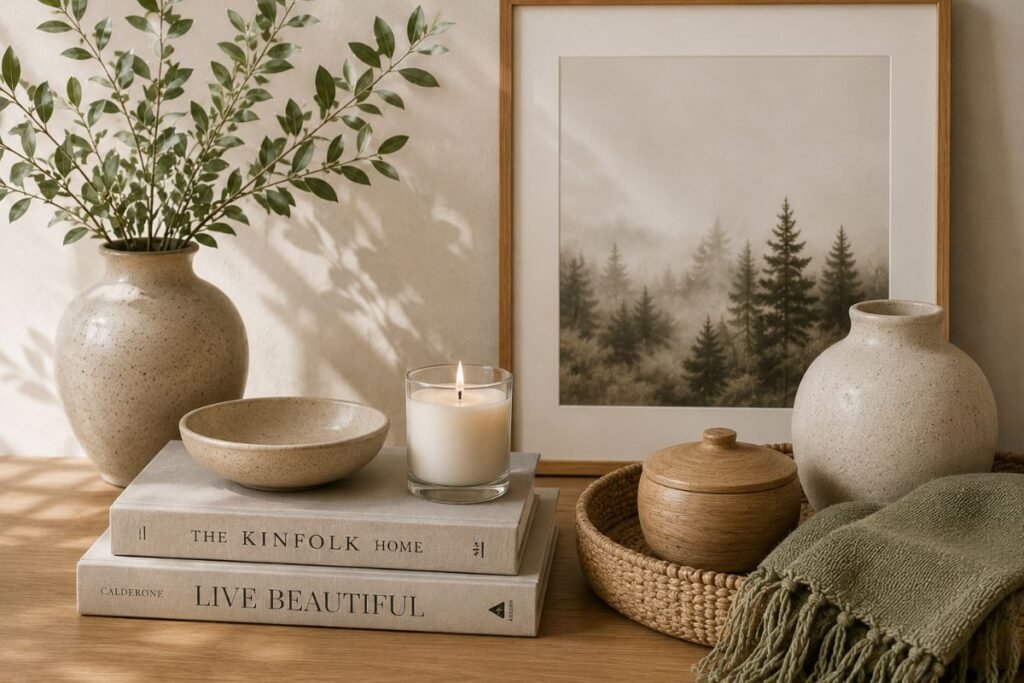
You don’t need to fill every inch. Leave part of the surface clear so the table stays functional. A simple grouping works better than evenly spaced objects: a small stack of books, a ceramic bowl, a candle, a small vase with a leafy branch.
A shallow tray helps contain smaller pieces and keeps things from looking scattered. One larger vase or sculptural object usually has more visual impact than several small unrelated accessories.
Add Storage That Blends In
Good storage supports the design instead of competing with it.
Keep everyday clutter, like cables, remotes, and paperwork, behind doors or in drawers. Use open shelving for a smaller, curated selection of books and objects, with space left between them so it doesn’t feel crowded.
Woven baskets are a natural fit for blankets or magazines.
And furniture that pulls double duty is especially valuable in a small room: a coffee table with hidden storage, an ottoman that adds seating, or a storage bench under a window.
The simplest systems tend to stay tidy longest, since complicated storage often goes unused.
Bring in Nature
Natural elements give a neutral room life and movement.
One medium or large plant can make a stronger statement than several small plants placed around the room. Place it beside the sofa, near a window, or in an empty corner that needs height.
Choose a pot in terracotta, matte ceramic, woven fiber, or another natural-looking finish. The container should complement the room rather than compete with the plant.
Fresh branches, dried grasses, or a few simple stems can also create an organic focal point. Place them in a tall vase on a console or use a smaller arrangement on the coffee table.
You can introduce nature through materials as well as plants. Wood furniture, stoneware, wool textiles, linen curtains, and woven baskets all help create a connection to the outdoors.
Keep Wall Decor Quiet
Wall decor should add personality without making the room feel visually crowded.
Choose one larger artwork, textile piece, or framed print rather than several small items scattered across the wall. Larger pieces create a clearer focal point and can make a compact room feel more composed.
Abstract shapes, simple line drawings, muted landscapes, botanical prints, and soft geometric designs all suit the Scandinavian look.
If you prefer a gallery wall, keep the frames consistent and leave enough space between them. A limited palette will help the collection feel connected.
A round or softly curved mirror adds a different shape and bounces light. Just make sure what it reflects is worth seeing.
Don’t feel obligated to fill every wall. Negative space is doing real work here.
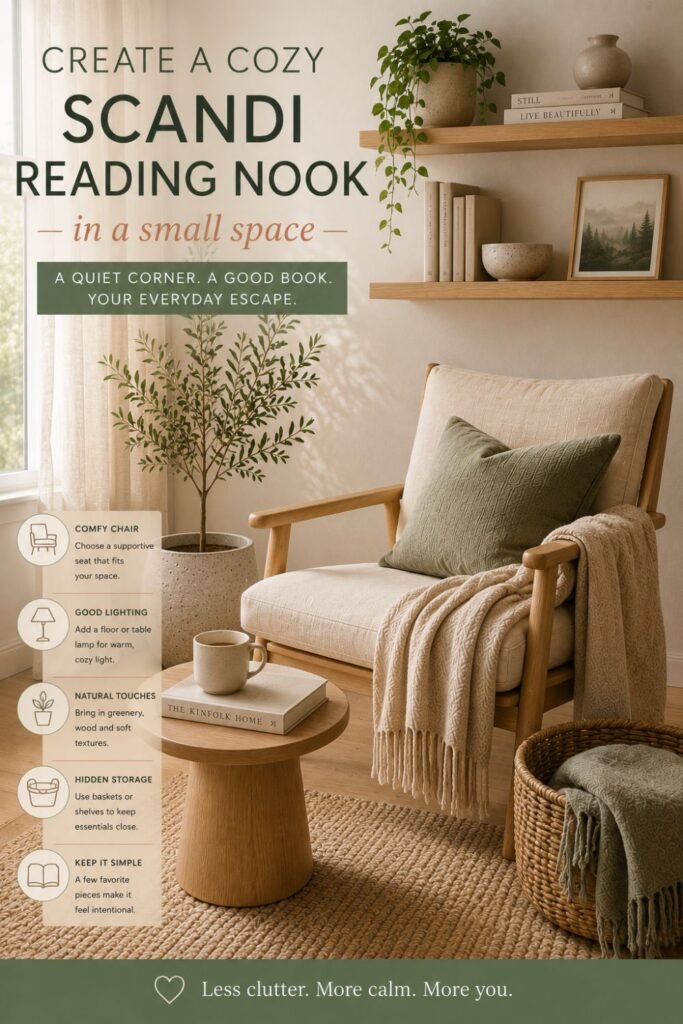
Create a Cozy Reading Corner
Even a small living room can include a simple reading area.
A compact accent chair with an open frame or slim legs, tucked near a window or floor lamp, doesn’t need much space to make an impact. Add a small side table for a book and a drink. Add a cushion or throw to connect the chair with the rest of the color palette.
No room for a separate chair? Turn one end of the sofa into a reading nook instead, with a wall-mounted lamp and a pillow within reach.
The goal is not to create a separate room within the room, but to make one corner feel especially comfortable and intentional.
How to Make the Look Work in a Small Living Room
Scandinavian style is naturally suited to compact spaces, but the room still needs a thoughtful layout.
Keep the main walkway clear and avoid placing furniture where it interrupts movement between doors, windows, and adjoining rooms.
Choose fewer pieces rather than several undersized items. A room filled with many small tables, chairs, shelves, and accessories can feel more crowded than one furnished with a few correctly scaled pieces.
Use furniture with visible legs where possible. The more floor you can see, the more open the room tends to feel.
Repeat colors and materials throughout the space. A consistent palette makes separate pieces feel connected and reduces visual noise.
Allow some surfaces and walls to remain empty. A small room needs pauses between decorative elements.
Most importantly, decorate for the way you actually live. A beautiful living room should still provide comfortable seating, practical storage, and surfaces you can use every day.
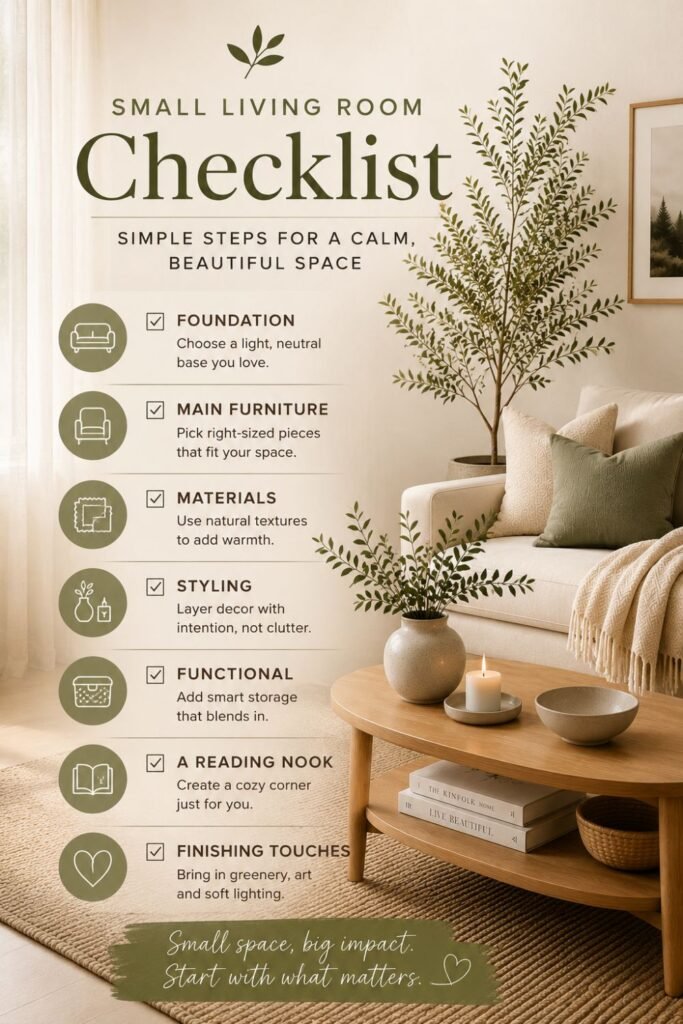
Scandi-Inspired Small Living Room Checklist
Use this checklist as a simple guide when putting the room together:
Final Thoughts
A Scandi-inspired small living room isn’t about a strict formula. It’s about choosing pieces with care.
Start with a warm neutral foundation, a well-proportioned sofa, and light wood furniture. Layer in softness through curtains, rugs, pillows, and throws. Finish with layered lighting, a bit of nature, and a small number of meaningful decorative pieces.
You don’t need to do it all at once. A gradual approach often results in a room that feels more personal. Start with what affects comfort and function most, then build from there.
The result is a small living room that feels calm without being empty, styled without being fussy, and easy to enjoy every day and comfortable enough to enjoy every day.
More Shop the Look Styles
For more shop the look style inspiration, check out these: